Most DAWs include built-in pitch shifting, which can work fine for simple tasks like moving a vocal up a semitone or tuning a sample to match your track but once you start using pitch shifting creatively, as a production tool for thickening vocals, building harmonies, designing sounds, or transforming audio into something completely unrecognizable, the limitations of stock tools become obvious fast.
Dedicated pitch shifter plugins let you control pitch and formants separately. This is what makes the difference between a natural-sounding shift and the chipmunk effect you get when both move together, but also offer features like MIDI pitch control, stereo widening with detuned layers, and creative effects such as feedback delays that shift pitch with each repeat.
I’ve picked out seven paid pitch-shifter plugins and two free options, ranging from precise pitch-correction tools to creative sound-mangling processors.
Some focus on doing one thing really well, while others include multiple engines and effects for everything from subtle vocal thickening to total sound transformation.
Here’s a quick guide to help you decide..
– For the most transparent and natural-sounding pitch shifting, zplane Elastique Pitch 2 and Auburn Sounds Inner Pitch Free Edition stand out.
– If creative sound design is your goal, Devious Machines Pitch Monster and Inner Pitch (Free Edition) offer radical processing and stacked voices for wild transformations.
– For workflow speed on vocals, Waves Vocal Bender and Slate Digital MetaPitch (with Grouped Instances) are optimized for fast, practical results in production.
– Soundtoys MicroShift and Eventide MicroPitch excel at subtle vocal thickening and stereo width, inspired by classic studio hardware.
– And finally, Aegean Music Pitchproof provides a simple, free solution for basic harmonizing and pitch shifting tasks. Let’s get started!
1. Slate Digital MetaPitch
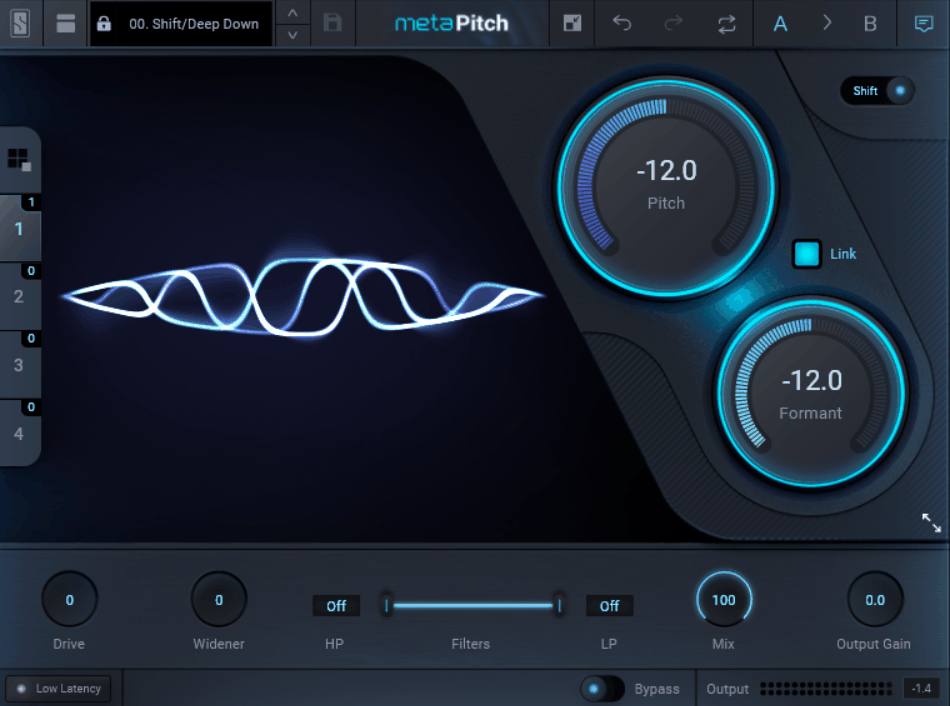
Slate Digital’s approach to pitch shifting is designed around the specific workflow of processing stacks of background vocals and layered vocal tracks with maximum efficiency.
MetaPitch provides independent pitch and formant control with up to 12 semitones of adjustment in either direction, a Robot mode that creates vocoder-style effects controllable via MIDI, built-in Drive and Widener controls, high and low-pass filters, a Low Latency mode for tracking, and the Grouped Instances feature borrowed from MetaTune.
What makes MetaPitch different is its Grouped Instances feature. If you have 20 background vocal tracks that all need the same pitch changes, you can adjust one MetaPitch instance and all the linked ones update at the same time.
- Grouped Instances
MetaPitch’s Grouped Instances let you link multiple plugin instances across different tracks so that adjusting one adjusts them all simultaneously.
For sessions with stacked background vocals, layered ad-libs, or multiple lead takes that all need identical pitch treatment, you make a single adjustment instead of 20. No other pitch shifter on this list offers this workflow feature.
- Robot Mode
A MIDI-controllable Robot mode applies a vocoder-style effect to the source signal, letting you draw custom melodies that the audio follows.
- Drive and Width
Built-in Drive adds saturation and harmonic warmth to the pitch-shifted signal, while a Widener control expands the stereo field.
- Filter Section
Adjustable high and low-pass filters shape the frequency content of the processed signal, letting you remove unwanted low-end rumble or harsh high frequencies from the pitch-shifted audio.
For mixing where the pitch effect needs to occupy a specific frequency range without competing with other elements, the filters provide targeted spectral control.
2. zplane Elastique Pitch 2
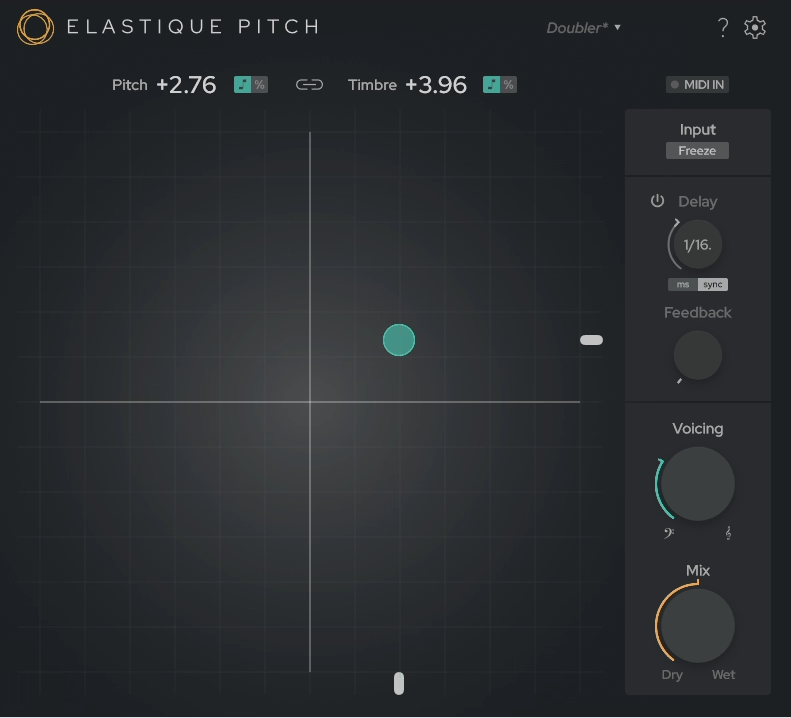
If you’ve ever used pitch shifting inside Ableton Live, FL Studio, or Cubase, there’s a good chance you’ve already heard the elastiquePro engine at work, because zplane licenses this technology to major DAW developers worldwide.
Elastique Pitch 2 features the same engine in a dedicated plugin: independent pitch and formant shifting (±12 semitones), multichannel support for up to 8 channels, phase-coherent processing, and a feedback delay with tempo sync for creative echo effects.
- Phase Coherence
Complete phase coherence across all channels preserves your stereo image and spatial positioning during pitch shifting. When you shift a stereo bus, a surround mix, or a set of drum overheads, the spatial relationships between channels remain intact rather than smearing.
- Feedback Delay
A built-in feedback delay, where each successive repeat is pitch-shifted again, creates cascading pitch effects that standard delays can’t produce.
- Formant Independence
Independent pitch and formant controls let you shift one without affecting the other, or link them for traditional pitch shifting.
The Voicing slider adjusts the dominant formant frequency, giving you additional tonal control beyond simple formant offset. For vocal work where you want to maintain natural vocal character while changing pitch, the independent formant control is essential.
- infiniSTRETCH
The infiniSTRETCH function lets you freeze and sustain audio indefinitely at any point, capturing a sound as a continuous tone.
Useful for ambient sound design and creating sustained textures from transient source material.
- No Pre-Analysis
Real-time processing means Elastique Pitch works instantly on any audio, from speech to monophonic instruments to polyphonic mixes. The plugin is optimized for low latency and uses little CPU, even with complex sources or large projects.
3. Waves Vocal Bender
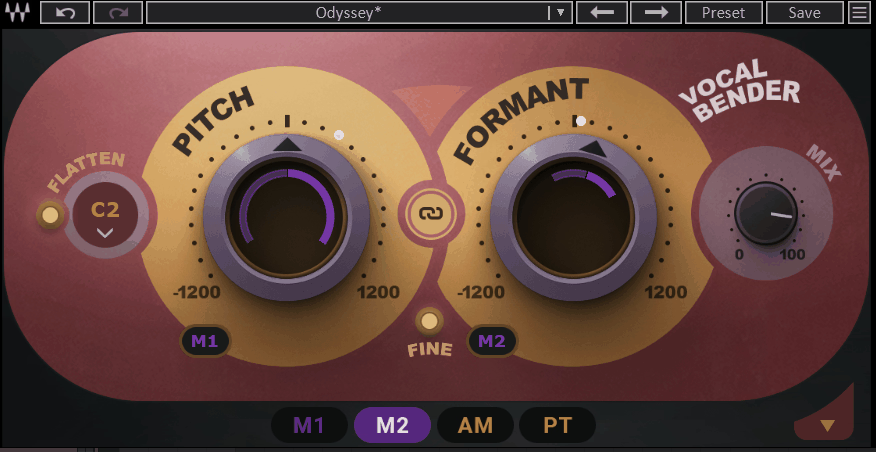
Built specifically for vocal pitch and formant manipulation rather than general-purpose pitch shifting, Vocal Bender targets a focused use case and delivers the streamlined workflow that quick vocal production decisions demand.
It provides real-time pitch and formant control with a simple, visual interface for quick vocal effects without complex menus.
I would reach for Vocal Bender when I need a fast, specific vocal pitch effect rather than a full-featured pitch-shifting suite. If you want to drop a vocal down for a verse, pitch a hook up for energy, or add formant character to a doubled vocal, Vocal Bender handles these tasks in seconds.
- Vocal Focus
Designed exclusively for vocal processing, not adapted from a general-purpose pitch shifter.
Algorithms are tailored to the human voice’s frequency range and harmonics for more natural-sounding vocal results than general-purpose pitch tools.
- Real-Time Control
Real-time response lets you adjust pitch and formant as audio plays, hearing changes immediately.
When making creative decisions on the fly, real-time feedback lets you work by ear, not just numbers.
- Visual Interface
A visual pitch and formant display shows exactly where your adjustments sit relative to the original signal.
For visual producers, seeing pitch and formant positions helps you make precise, intentional adjustments, not just guesses.
4. Boz Digital Labs ProVocative
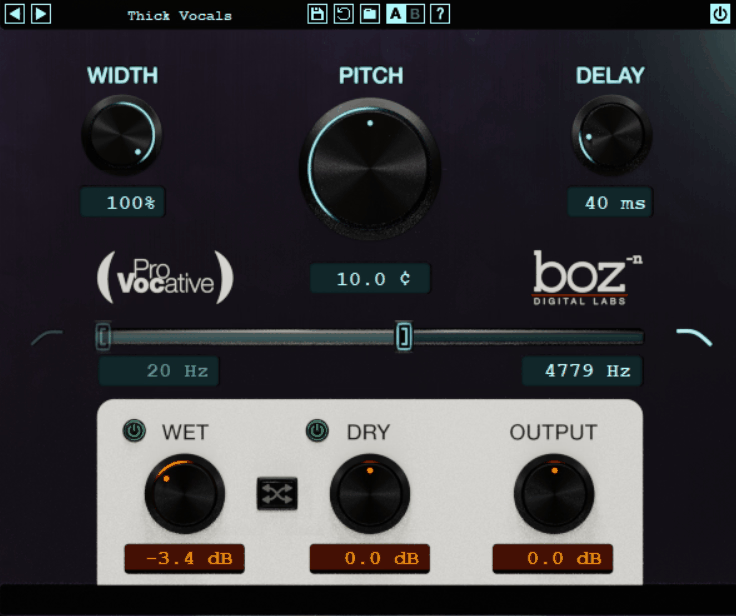
This one is built around the idea that most producers use pitch shifting on vocals for the same few tasks: creating artificial doubles, thickening a lead vocal, and adding subtle width through detuned layers.
I like that ProVocative doesn’t try to do everything. It’s great at vocal thickening and doubling, and its interface is designed for that specific purpose.
- Doubling Engine
A dedicated vocal doubling algorithm creates realistic-sounding artificial double tracks from a single vocal take.
Instead of simply detuning a copy, ProVocative applies the timing and pitch variations that natural vocal doubles have, producing results that sound more like an actual second performance than a processed copy.
- Width Control
Stereo width processing through pitch-shifted layers adds dimension to a vocal without the phase issues that simple left-right panning of detuned copies can create.
For vocals needing more space in the mix, the width control offers a natural-feeling spread.
- Mix Integration
Designed to produce results that sit naturally in a mixed context rather than sounding impressive in a solo but fighting with other elements.
The processing is calibrated for the subtle, supportive pitch effects used in professional vocal productions, not for dramatic transformations.
- Simple Interface
A focused, uncluttered layout puts the essential controls front and center without burying useful parameters in sub-menus. You see what ProVocative does, adjust the handful of controls that matter, and move on with your mix.
5. Soundtoys MicroShift
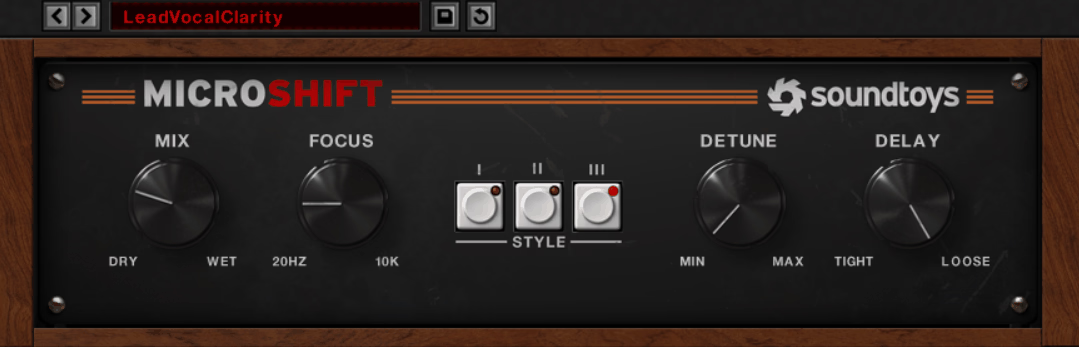
MicroShift applies subtle pitch detuning to create three distinct stereo widening styles modeled after classic hardware shifters.
It has been on countless professional mixes because it makes things wider without sounding processed. Apply it to a vocal, guitar, or synth pad, and the source spreads across the stereo field as if it was always meant to be that wide. MicroShift plugin shines in pop, rock, R&B, EDM, and modern hip-hop where lush, wide vocals or synth beds are essential.
It is a classic trick for doubling lead vocals in pop and radio-ready genres, thickening guitars in rock mixes, and giving pads and keys the enveloping width often found in electronic and cinematic tracks.
- Three Styles
Three distinct widening algorithms, modeled after classic hardware units, give you meaningfully different stereo characters from a single plugin.
Style I references the Eventide H3000, Style II the AMS DMX 15-80s, and Style III a Soundtoys original. Each produces a different flavor of width, from tight and focused to wide and washy. For mixing, having three distinct approaches means you pick the character that suits each source rather than applying the same widening to everything.
- Subtle Shift
The pitch detuning is measured in cents rather than semitones, operating in the range of micro-adjustments that your ear perceives as width rather than as a pitch change.
- Focus Control
A Focus parameter adjusts the frequency range over which the widening effect is applied, letting you target it to specific parts of the spectrum.
Apply width to the upper harmonics of a vocal while leaving the fundamental untouched, or spread only the midrange of a guitar. Frequency targeting gives you precision that full-spectrum widening doesn’t.
- Zero Hassle
MicroShift loads, you pick a style, adjust the amount, and you are done. No routing complexity, sidechain setup, or MIDI requirements.
6. Eventide MicroPitch
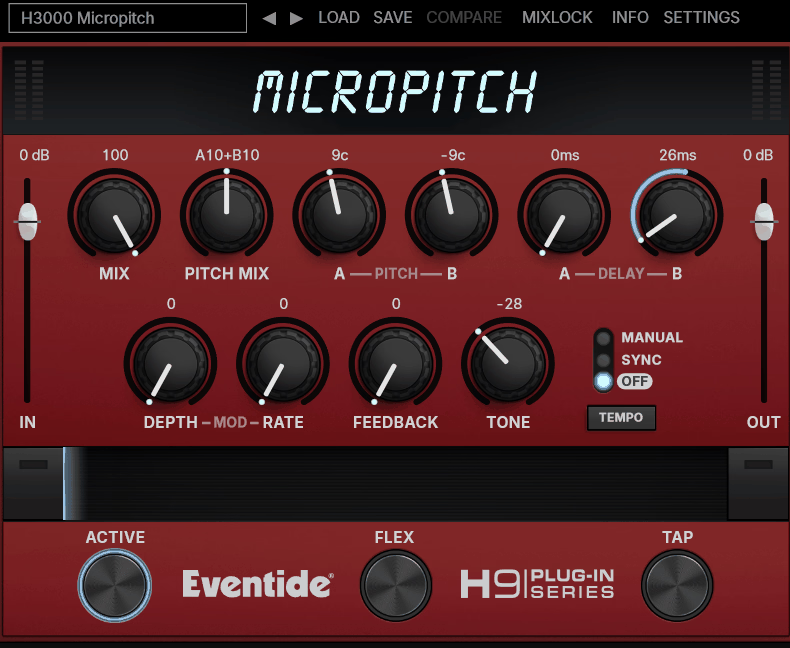
This one draws from the H3000 Harmonizer’s legendary micro-pitch algorithms and adds modern delay, modulation, and tone-shaping controls that the original hardware didn’t offer.
If you want the Eventide character that’s been on records since the 1980s in a focused plugin rather than paying for the full H3000 emulation, MicroPitch gives you the relevant algorithms at a lower cost and with a simpler interface.
- H3000 Lineage
Algorithms derived from the Eventide H3000 Harmonizer carry the sonic DNA of one of the most famous studio effects processors ever built.
The H3000’s micro-pitch effect became a standard vocal production technique in the 1980s and ’90s, and MicroPitch recreates that specific character. For producers who want that classic Eventide sheen on their vocals and instruments, the lineage means you’re getting the real thing rather than an approximation.
- Delay Integration
Built-in delay on each detuned voice adds time-based dimension to the pitch effect, creating a thicker, more complex result than pitch shifting alone.
Adjusting the delay times independently for left and right channels creates asymmetric stereo patterns that sound wider and more natural than symmetric processing.
For vocal production where you want the thickening effect to have depth as well as width, the delay integration is essential.
- Tone Shaping
Integrated tone controls let you shape the frequency content of the pitch-shifted signal before it blends with the dry audio. Removing low frequencies from the detuned voices prevents the bass from getting muddy, while boosting the highs can add air and shimmer to the widened signal.
For mixing where the pitch effect needs to serve the arrangement rather than dominate it, the tone shaping ensures the processed signal fits cleanly.
7. Devious Machines Pitch Monster
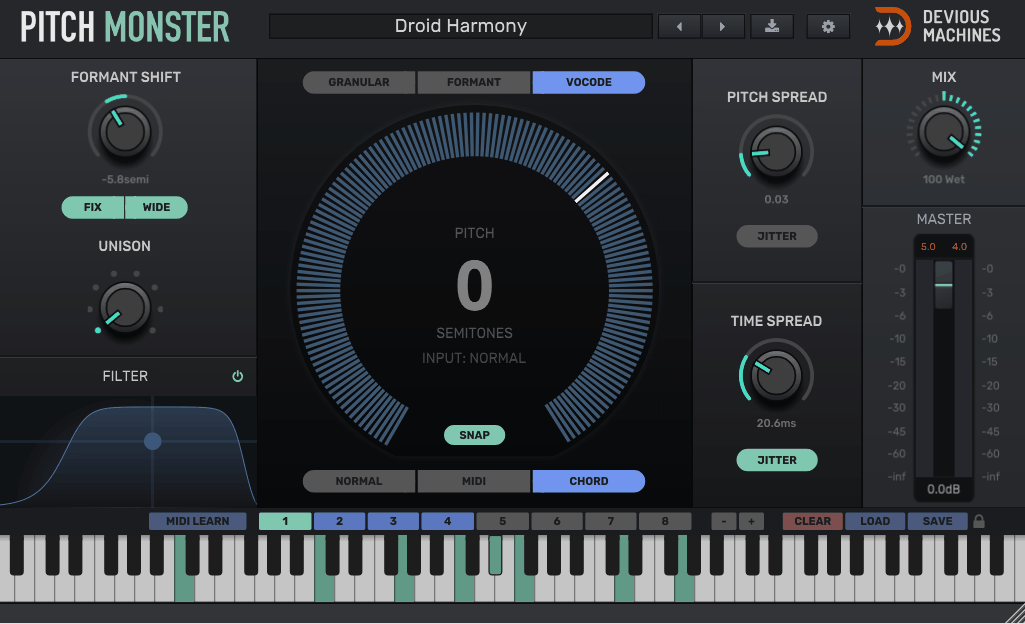
Next, Pitch Monster features granular, formant, and vocoder engines, up to 8 voices of polyphony across a 6-octave range, 8 voices of unison per voice for a potential 64-voice stack, real-time MIDI control, 8 programmable chord memory slots, and dual high and low-pass filters for tonal shaping.
It fills a unique spot between basic pitch shifters and full-featured vocal processors.
It’s good for basic pitch shifting, but its real strength is in creative uses. With three engines, big voice stacks, and MIDI control, you can turn a spoken word into a 64-voice choir or a robotic melody in just minutes.
- Triple Engine
Granular, formant, and vocoder engines give you three fundamentally different approaches to pitch shifting in one plugin. The granular engine produces smooth, clean shifts suitable for standard pitch work.
The formant engine manipulates pitch and formants independently, enabling gender transformation and creature voice effects.
The vocoder engine creates robotic vocal textures controllable via MIDI. Switching between engines on the same source material produces dramatically different results.
- 64-Voice Stack
8 voices of polyphony, each with 8 voices of unison, create a maximum potential of 64 simultaneous voices of pitch-shifted audio. Building a massive wall of harmonized, detuned, or chorused audio from a single source is possible without needing multiple plugin instances.
For producers who want to turn a solo vocal into a massive choir or transform a mono synth into an orchestral texture, the voice count provides the raw material.
- Chord Memory
8 programmable chord memory slots store pitch configurations that you recall instantly during performance or mixing. Build the harmonies for your track’s verse, chorus, and bridge, save each to a slot, and switch between them via MIDI.
For live vocal harmonization and studio production where you need consistent harmonic settings across song sections, the chord memory provides organized, repeatable control.
- MIDI Performance
Real-time MIDI control lets you play Pitch Monster like an instrument, controlling pitch from a keyboard or MIDI controller with support for note input, glide, and pitch bend.
Route MIDI to Pitch Monster and impose new melodies on existing audio, create real-time harmonies, or perform pitched vocal effects during a live show. The low-latency DSP engine makes MIDI performance responsive enough for stage use.
Freebies
1. Aegean Music Pitchproof (Free)
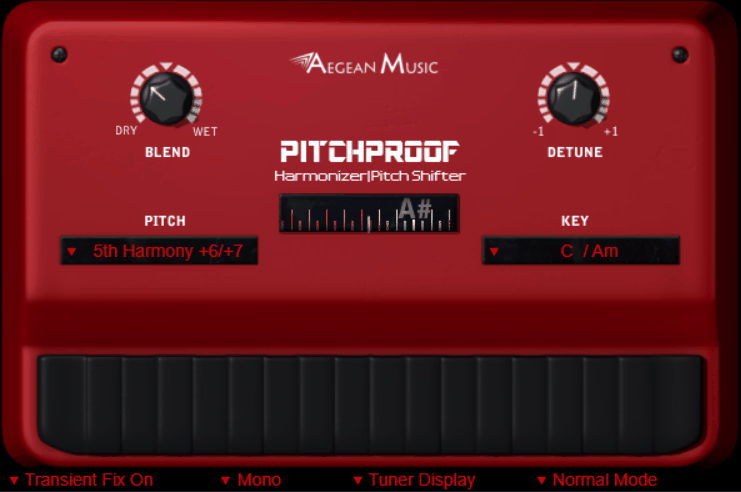
A genuinely useful free pitch shifter that handles the basic job of shifting pitch in real time with clean, usable results. Aegean Music Pitchproof provides pitch shifting in semitone increments with a simple interface that does exactly what you need without complexity.
If you need a straightforward, no-cost pitch shifter for creating harmonies, octave effects, or basic pitch adjustment and you don’t want to spend money, Pitchproof is the go-to free option that countless producers have relied on for years.
It doesn’t have the same quality or features as the paid plugins here, and I won’t pretend it does. Still, for a free tool, it does its job well.
- Free and Functional
Completely free with no trial limitations, hidden costs, or stripped-down “lite” versions. You download it, install it, and use it in your productions without restrictions.
For producers on a tight budget who need pitch shifting capability without financial commitment, Pitchproof provides that capability at zero cost.
- Semitone Shifting
Pitch shifting in clean semitone increments makes it easy to create harmonies at specific musical intervals. Set Pitchproof to shift up a third, fifth, or octave, and you have instant harmonic content from a single source.
For quick harmonization on vocals or instruments, the semitone-based control is musically intuitive.
2. Auburn Sounds Inner Pitch (Free Edition)
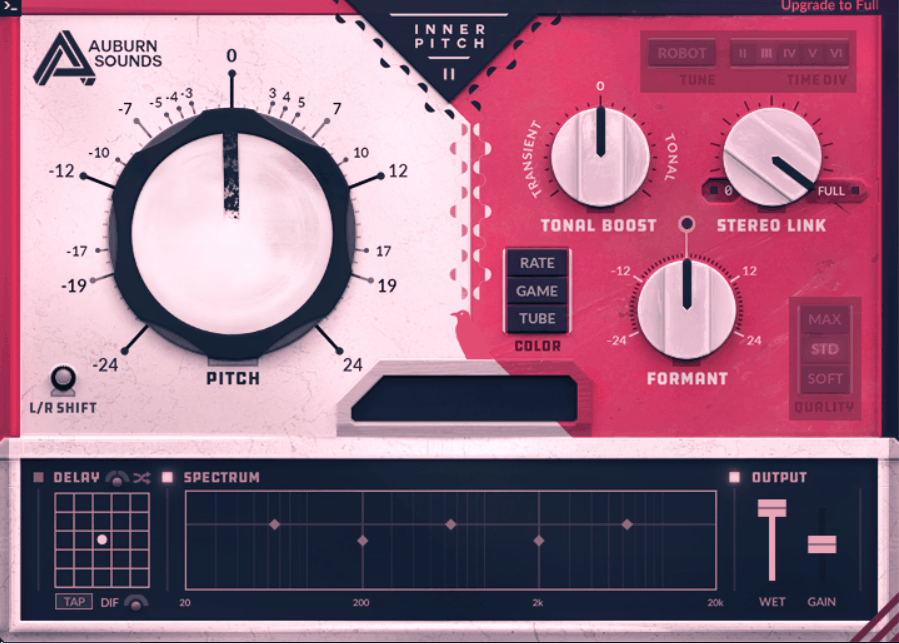
Inner Pitch offers a Free Edition that includes pitch shifting and independent formant shifting each with a range of plus or minus 2 octaves (24 semitones), a 3-band spectral EQ, stereo widening via L/R pitch offset, a delay unit with ping-pong, diffusion, and infinite feedback, and three types of in-loop distortion (Rate, Game, and Tube).
The Full Edition just adds some extra fine-tuning and vocal hard-tuning modes. For a free plugin, the features and sound quality are impressive.
- Full Feature Free
The Free Edition includes all core processing: pitch shifting, formant shifting, 3-band spectral EQ, delay unit, and distortion modes
- Delay Section
A built-in delay with ping-pong mode, diffusion, and infinite feedback turns Inner Pitch from a simple pitch shifter into a creative sound design tool.
Set the delay to infinite feedback with pitch shifting active, and you create endlessly ascending or descending sonic textures. The delay processes happen in-loop with the pitch shifting, meaning each repeat is shifted again for cascading pitch effects.

Hey, I started Music Circuit to write about plugins and gear, so you always know what’s new and what’s worth trying. You’ll also find guides and tips here to help you get started, whether you’re picking your first plugin or building out a full studio.