When you purchase through the links on my site, you support the site at no extra cost to you. Here is how it works.
Reverb is the one effect I would genuinely struggle to mix without. Every track sits somewhere, whether that place is a tight vocal booth, a concert hall or an imaginary space that could never physically exist, and the plugin creating that space shapes the emotional read of the whole record.
The tricky part is that reverb has quietly become the most crowded plugin category out there. You have algorithmic designs chasing total transparency, convolution and Fusion-IR tools recreating classic hardware, AI-assisted mixers that EQ themselves into your track, and experimental engines that treat reverb as an instrument in its own right.
I picked the nine paid plugins below to cover that whole spread, from surgical mix tools like FabFilter Pro-R 2 to sound design machines like Soundtoys SpaceBlender. At the end you will find 5 free tools that I would honestly put up against paid options without embarrassment.
1. Valhalla DSP FutureVerb
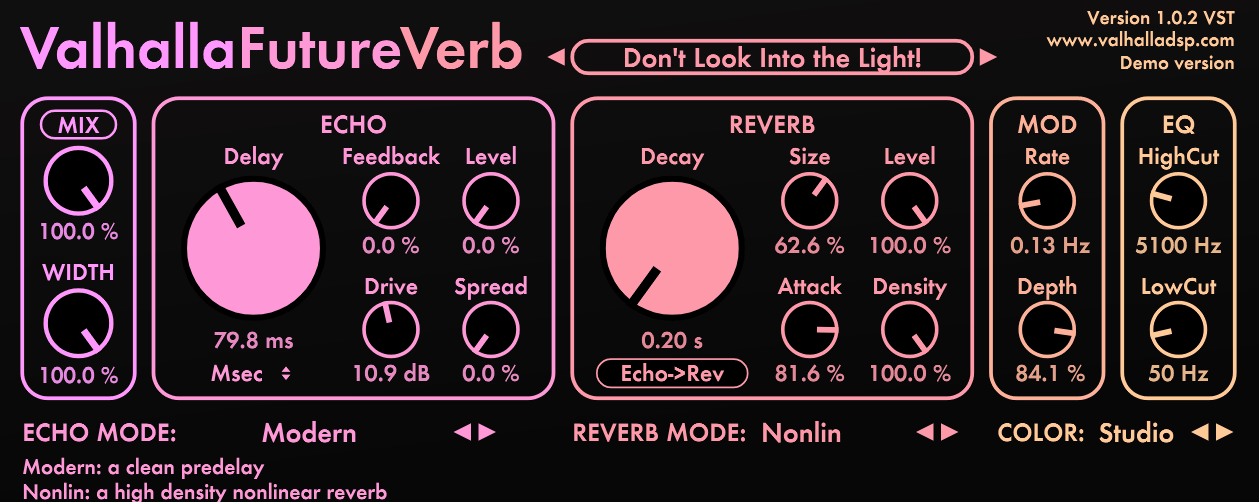
Valhalla releases are rare events, so when FutureVerb landed in November 2025 after what the company describes as 8 years of research and development, I paid attention. The stated goal was reverb algorithms that stay natural and transparent at every decay setting, without the metallic artifacts older digital designs drag along.
The twist is that Valhalla admits it does not actually believe in perfection, so a full Echo section sits alongside the reverb engine for whenever sterile is the wrong answer.
- 8 Reverb Modes
Five modes cover the staples, Room, Chamber, Plate, Hall and Cathedral, while Space, Frozen and Nonlin push into huge ambient washes, infinite textures and tight nonlinear effects. The design brief was realism at all decay settings, and I found the short rooms hold up as well as the giant halls, which is where older algorithmic reverbs usually give themselves away.
Switching between modes keeps the workflow fast because the control set stays consistent across all eight. You audition spaces without relearning the panel each time.
- 12 Echo Modes
The Echo Mode control switches between twelve different delay flavors, running from clean digital repeats through colored, characterful options. Honestly, this half of the plugin could have shipped as a separate product and nobody would have blinked.
Having it inside the reverb changes how you build spaces from the ground up. Echoes stop being an afterthought bolted on after the tail is set and become part of the space itself.
- Transparent Tails
The entire point of those 8 years was killing the metallic ring of earlier algorithmic topologies. Reverbs sound complete and dense without any modulation applied, then turn lush when you bring modulation in.
For mix bus and mastering duty, that artifact-free behaviour is the feature that actually matters. Long decays on exposed vocals or solo piano survive without the graininess that forces you to hide the tail.
- Self-Documenting UI
Roll over any control and a tooltip explains it at the bottom of the window, in classic Valhalla fashion, with a comprehensive manual included in the installer for the deeper questions.
2. FabFilter Pro-R 2
I would say no reverb balances depth against usability better than this one.
Pro-R 2 stacked serious additions onto the already respected original without disturbing the workflow that made version one a fixture in mixing templates, and its Space knob still unifies room model and decay time into a single control that never fights itself.
The original algorithm for realistic physical spaces now sits next to two new ones. Vintage chases the retro digital boxes of the 80s and 90s, complete with their characteristic grit and bloom, while Plate models the metallic density of electromechanical plate reverbs.
From my perspective, Vintage mode alone justifies the update for anyone mixing pop or synth-heavy material. It brings the flavor people buy hardware emulations for, inside a modern workflow.
- Six-Band Post EQ
Output equalization runs through six bands with filter slopes up to 96dB per octave, shelves and bells included. In immersive sessions, individual bands route to any combination of channels through the Speakers panel, so you can EQ the height channels differently from the bed.
That per-channel EQ trick is the kind of detail post engineers end up depending on. Everyone else gets an unusually capable tone shaper on the tail.
- Dolby Atmos Support
Channel layouts up to 9.1.6 are handled automatically the moment you drop the plugin on a surround channel.
- IR Import
Load an impulse response in WAV or AIFF and Pro-R 2 analyzes it, then configures its algorithmic engine and EQ bands to replicate the space. You get the character of a captured room with the flexibility of algorithmic controls afterward.
Convolution alone never offers that. Once imported, the space stretches, brightens and ducks like any other Pro-R 2 preset.
- Ducking, Gate, Thickness
The Ducking control drops the wet signal whenever the dry signal plays, keeping vocals clear without automation, and the tempo-syncable Auto Gate nails the gated drum trick in seconds. Thickness adds density, compression and analog-style saturation to the tail.
Formats run wide too: VST, VST3, CLAP, AU, AAX Native and AudioSuite, plus an AUv3 version for iPad.
3. iZotope Neoverb
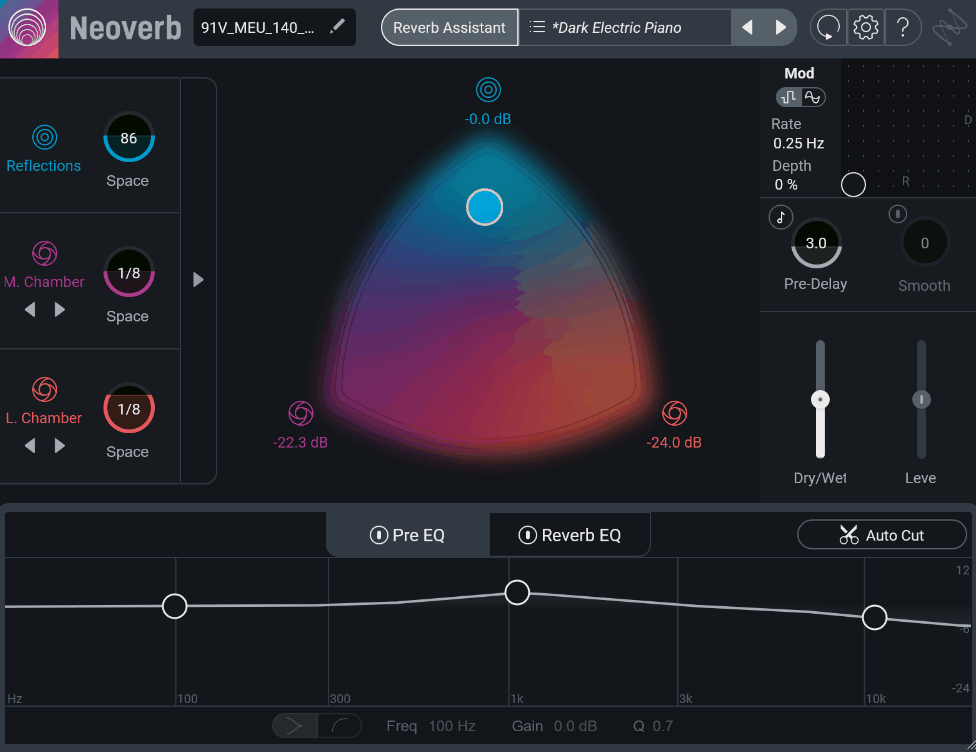
Some plugins want you to design a space, and Neoverb wants to design it with you. It was the first reverb carrying iZotope’s assistive technology, built around three reverb engines, one for early reflections, one for Room, Medium Chamber and Plate tails, and one for Large Chamber and Hall tails.
The EQ intelligence around those engines is what changed my workflow, since the reverb effectively carves itself out of the dry signal’s way.
- Advanced Panel
Deep editing exposes 17 additional parameters including decay time, size, damping, diffusion, modulation and input smoothing. Anything the assistant sets can be inspected, adjusted and saved as your own preset.
Alongside it, the Masking Meter measures collisions between Neoverb and other iZotope plugins in the session, including additional Neoverb instances. For stacked vocal productions, seeing exactly where reverbs pile up saves real guesswork.
- Reverb Assistant
A four-step setup runs in real time: pick a size, a style and one of four tones, Clean, Dark, Bright or Airy, while the assistant selects and blends reverb combinations to match. It then listens to your source and suggests EQ moves for the cleanest result.
I treat the output as a starting point instead of a final answer, and it earns that role. Thirty seconds of guided setup replaces ten minutes of preset skipping.
- Auto Unmasking
The Reverb EQ listens to the dry signal and pulls the reverb out of its way automatically, and it does this without the pumping character of ducked reverb. Even mixed loud, the tail stays out of the vocal’s lane.
4. Waves CLA Epic
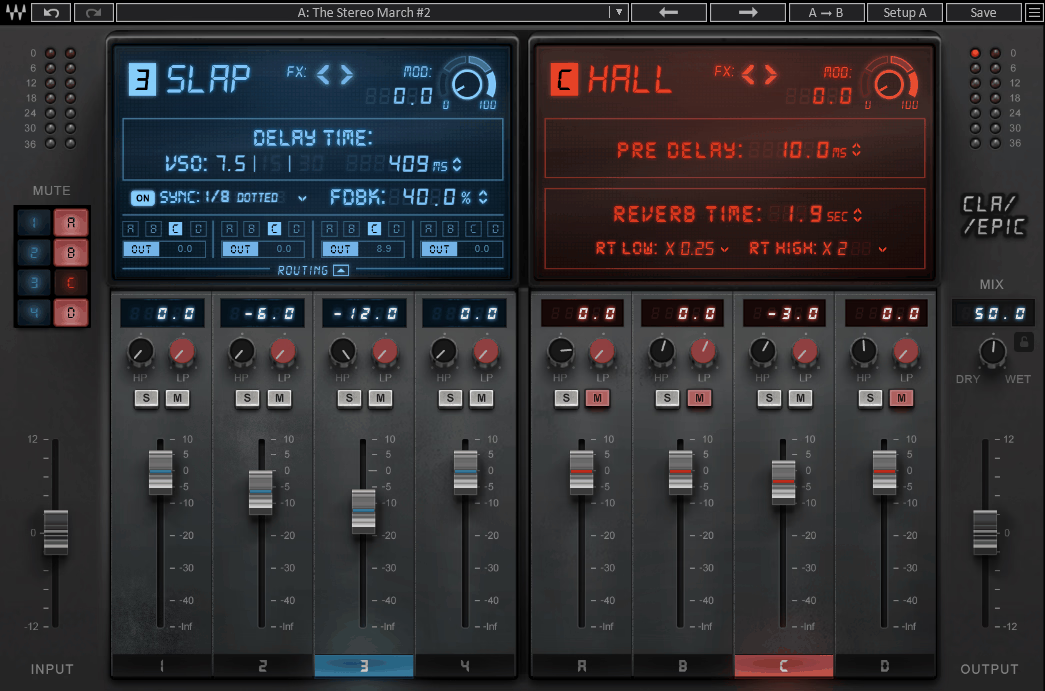
Chris Lord-Alge mixes with a rack of delays and reverbs running simultaneously, blended on console faders, and CLA Epic packages that entire setup into one window. All 8 modules run at once if you want, loaded with Chris’s default settings, so the fastest workflow is simply pushing faders up and listening.
To be honest, I did not appreciate how much of the CLA depth trick comes from sending delays into reverbs until this plugin made the technique one click.
Slap offers 3 EQ slopes emulating analog tape machines running at 7.5, 15 and 30 ips, which is a lovely period-correct touch. Tape runs two taps with independent time, sync, feedback and offset controls.
Throw works like Tape except its taps trigger manually or through automation, built for pushing single words and phrases into space. Crowd behaves like early reflections that grow in size and width as they decay, filling gaps around a vocal.
- 350+ Presets
50 presets come from Chris himself covering vocals, drums, guitars and keys, with over 300 more contributed by Greg Wells, Michael Brauer and other established mixers
- Four Reverbs
Plate is modeled on Chris’s lead vocal reverb with pre-delay, time and damping controls, and Room recreates the sound of his multi-unit room bus. Hall shares the plate’s control set with a very different EQ curve underneath.
Space is the wildcard, a nonlinear reverb that turns into a proper gated effect at its highest setting. Between the four, the classic CLA vocal and drum treatments are all represented.
- EchoSphere Included
A slimmed-down companion plugin called CLA EchoSphere ships alongside, carrying just the Slap delay and Plate reverb. When the full rack is overkill, the light version covers the classic slap-plus-plate vocal treatment on far less CPU.
Formats across both plugins cover AAX, AU, VST3, SoundGrid and AudioSuite. Having the small one for quick jobs keeps the big one special.
5. Baby Audio Crystalline
The question behind Crystalline is a fun one: what would the engineers behind the classic hardware reverbs build with today’s processing power? Baby Audio’s answer runs on an allpass loop algorithm with its own sonic fingerprint, wrapped in controls the vintage boxes could never have offered.
Over 300 presets ship in the box, built by Baby Audio plus producers including Damian Taylor, Michele Canova and Eric J Dubowsky, and formats cover VST, VST3, AU and AAX with M1 native support.
- Four-Section Layout
Fifteen creative parameters split across Reflections, Depth, Clean-up and Shape, each section holding three controls. Reflections covers Size, Sparkle and Width, running from tiny rooms to huge halls with a stereo image adjustable from mono to extra wide.
The grouping sounds trivial and is not. Knowing which three knobs handle character versus cleanup versus dynamics makes the plugin learnable in one session.
- Tempo-Synced Times
Pre-delay and decay hard-sync to the DAW tempo, locking reflections to the musical grid, while a Sync/MS switch flips back to milliseconds for the classic free-running approach.
- Transients Control
The Shape section decides whether reverb energy hits the attack or the sustain of the incoming signal. Emphasizing sustain keeps the reverb airy and light behind the source, while emphasizing attack gets splashy and dense.
On percussive material this is the difference between a wash and a controlled effect. Snares in particular respond dramatically to small moves here.
- Built-In Ducker
- Creative Extras
A freeze function holds the tail indefinitely, a reverser flips the reverb around for transition effects, and shimmer plus modulation cover the ambient territory. An Eco mode drops resolution and disables Shimmer to cut CPU when instances multiply.
6. Arturia Rev INTENSITY
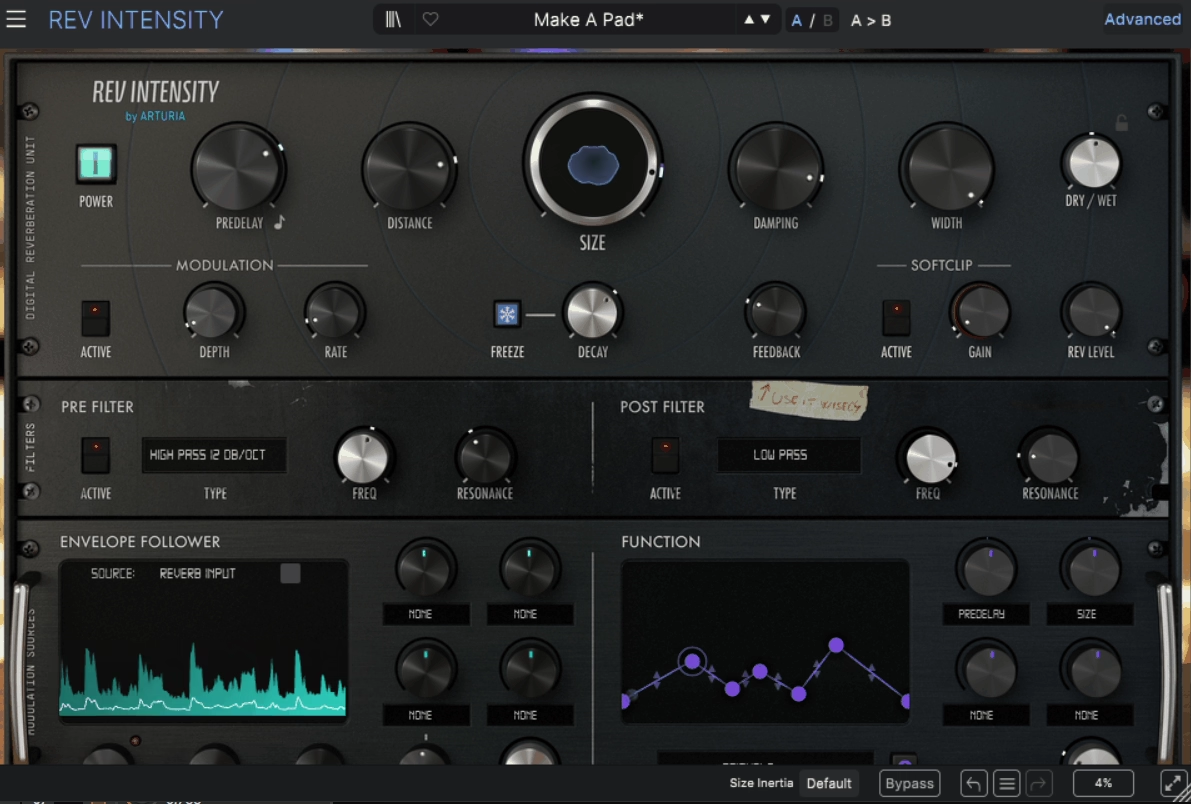
Arturia spent years modelling classic gear for the FX Collection, and Rev INTENSITY is what happened when the team built a reverb with no hardware reference at all. Not a copy, not an emulation, not a tribute, in the company’s own words, just an original algorithmic design pointed squarely at sound design, lush and wide on its own and light on the CPU.
What separates it from a standard hall or plate is that practically everything inside is a modulation target.
- 13 Mod Destinations
The engine exposes up to 13 destinations for modulation, reaching parameters no conventional reverb lets you animate. Pulsing rotary-style effects, gated spaces and rhythmic tails all come from routing decisions instead of preset hunting.
That number sounds abstract until you use it. Modulating the pre and post multimode filters alone produces movement most reverbs need external plugins to fake.
- Envelope Follower
Feed it the plugin’s input or a sidechain source and map the dynamics onto up to 4 parameters simultaneously. The reverb then reacts to the incoming signal or to a completely different track, ducking, blooming or brightening with the groove.
No automation lanes get drawn for any of this. On drums feeding a synth reverb through sidechain, the results stop sounding like an effect and start sounding like arrangement.
- Function Generator
Draw or sequence custom animation curves, or browse the function presets, then assign the output to any control in the plugin. Arturia uses this same concept across its effects line, and here it turns the reverb tail into a playable, evolving element.
Slow curves create tails that transform over bars. Fast stepped curves chop the space rhythmically, sliding the plugin toward sequencer territory.
- Freeze And Clip
The freeze feature locks a moment of reverb indefinitely with controllable release behaviour, so frozen textures fade musically instead of cutting off. The feedback line runs through soft clipping you can deliberately push into saturation for aggressive, colored tails.
Between the two extremes, ambient transitions and distorted textures live in one plugin. It ships with a preset library built around these features, integrated tutorials that teach the routing, and VST, VST3, AU, AAX and NKS support in a resizable window.
7. Eventide Temperance Pro
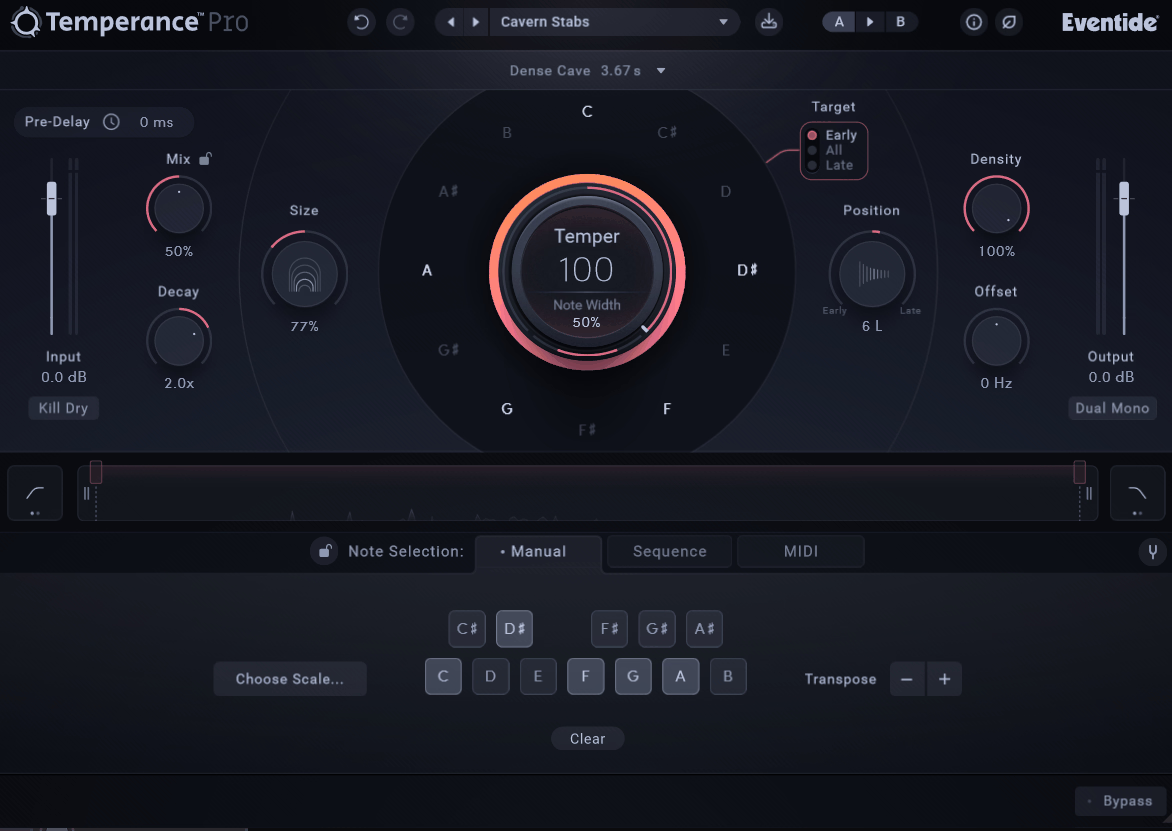
Every other plugin on this list thinks about reverb in terms of time and frequency. Temperance Pro thinks in notes.
Released in October 2025, Eventide’s modal reverb operates on the 12-note chromatic scale, building spaces from what the company describes as thousands of independent resonators so the reverb follows the harmony of your track.
I must say the concept sounds academic until you hear a tail bloom on the chord tones and politely fade everywhere else.
- 29 Modal Spaces
The collection spans intimate rooms, grand halls, mechanical reverbs and synthetic experiments, all converted from algorithmic and convolution sources into the modal domain using Eventide’s patented machine learning process. Several spaces come from acoustics veteran Ralph Kessler.
The Kessler entries alone give the library serious mixing credibility beyond the experimental angle. You could use this plugin conventionally and never touch the tempering, though that would be missing the point.
- Three Note Modes
Manual mode builds selections with one click on a note-roll input, helped by a dropdown of scales and chords. Sequence mode steps through note selections in time, following a progression as the song moves.
MIDI mode hands the selection to a keyboard, so you play the reverb’s harmonic content live. That last one effectively turns the plugin into a performable instrument sitting on an aux.
- Modal Tempering
The Temper and Range controls set how strongly selected notes are emphasized or suppressed and which octaves the effect reaches, with Target and Note Width refining behaviour further. Selected pitches bloom and sustain while others decay away, making the space harmonically aware of the material passing through it.
On chordal sources the result reads as musical intention instead of generic ambience. This is genuinely new territory for a reverb, not a variation on an old idea.
Formats cover VST3, AU and AAX with iLok authorization. Exotic concept, conventional integration.
8. Soundtoys SpaceBlender
Most reverbs simulate spaces that could exist, and SpaceBlender deliberately builds spaces that could not.
It grew out of Soundtoys’ fascination with the ambient pioneers and their layered tape loops, running on an algorithm inspired by swarm synthesis instead of the feedback delay networks or convolution engines behind conventional reverbs.
And here is what you get:
- Swarm-Inspired Engine
The delay-based algorithm works without feedback, so the reverberation has definitive start and end points instead of a recirculating tail. That structural quirk lets you dynamically reshape the reverb in ways that would make a traditional design unstable.
Massive textures build without runaway resonance or self-oscillation. Conventional duties still work fine, which surprised me given how experimental the architecture is.
- Interactive Visualizer
- Five-Knob Surface
Time, Color, Texture, Mod and Mix cover the whole panel, plus a Freeze button. Color decides whether the sound grows brighter or darker as it travels through the reverb, Texture adjusts density like a diffusion control, and Mod sets the depth of fixed-rate chorus-style movement.
Darkening long tails with Color keeps huge settings from swallowing a mix, one knob handling what usually takes damping curves. The restraint of the layout is very deliberate and very Soundtoys.
- Freeze Button
- Effect Rack Integration
Since the Soundtoys 5.5 update, SpaceBlender wires fully into Effect Rack, with 67 new rack presets built around it. Chaining it after EchoBoy or Crystallizer inside one rack opens the really strange territory the swarm engine invites.
The interface is resizable, and formats cover VST, VST3, AU and AAX on Mac and Windows. Released in May 2025, it already feels like a permanent part of the Soundtoys family.
9. Slate Digital VerbSuite Classics
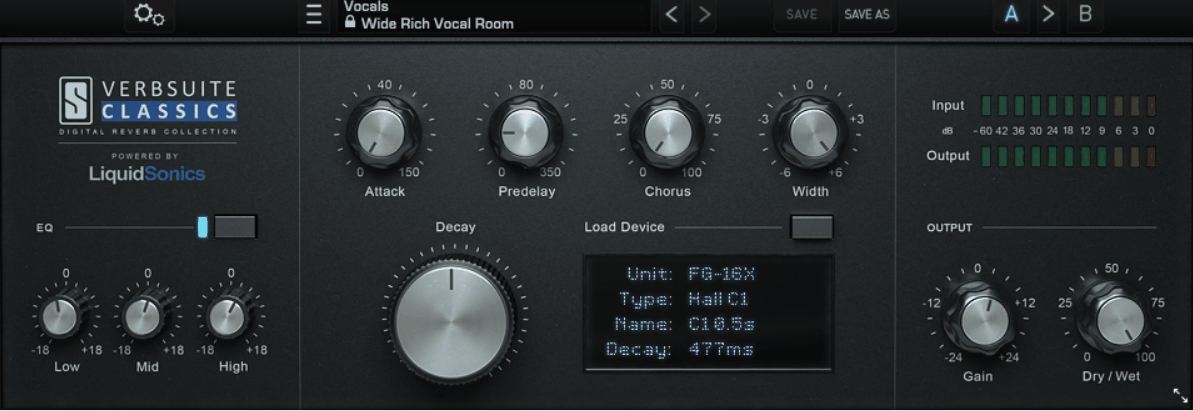
Instead of picking one classic digital reverb to model, Slate Digital modeled eight of them. VerbSuite Classics collects 8 legendary units spanning forty years of studio history, built in partnership with LiquidSonics on its Fusion-IR technology, with authorization through iLok Cloud, a dongle or machine activation in AAX, AU, VST2 and VST3.
The technology matters more than the count, honestly.
- 8 Modeled Units
You get FG-480, which is the Lexicon 480, FG-250 the EMT 250 from 1976, the world’s first digital reverb, FG-16X the AMS RMX16 behind the sound of the 80s, FG-2016 the Eventide SP2016, FG-QRS the Quantec Room Simulator, FG-2000 the rare Sony DRE 2000, and FG-6000 a modern Danish powerhouse.
Auditioning an EMT 250 against an RMX16 on the same vocal takes two clicks. Several of these units had never been offered as plugins before this release.
- Fusion-IR Engine
Static impulse responses capture a single lifeless snapshot of a reverb. Fusion-IR uses multiple modulated true-stereo capture streams to reproduce the evolving, breathing behaviour of modulated digital hardware, which is the whole reason those boxes were loved.
The famous Lexicon-style modulation actually moves here. Early and late reflections stay separated for independent control, solving the washiness static convolution libraries usually suffer from.
- Free BM7 Expansion
LiquidSonics provides FG-BM7, a no-cost expansion loading public-domain Bricasti M7 Fusion-IRs into the plugin. Many engineers consider the M7 the best-sounding digital reverb ever built.
Getting its captures as a free add-on inside a paid product is remarkable. That expansion alone would cost serious money anywhere else.
- Simple Control Set
Decay, Attack and Width plus a 3-band EQ and dry/wet cover every model identically. The hardware originals buried their options across pages of tiny LCD menus, and this strips everything down to what you actually adjust in a mix.
Hundreds of mix-ready presets ship in the box. Consistency across models also means switching units mid-session keeps your settings meaningful.
Freebies:
Wave Alchemy Magic7
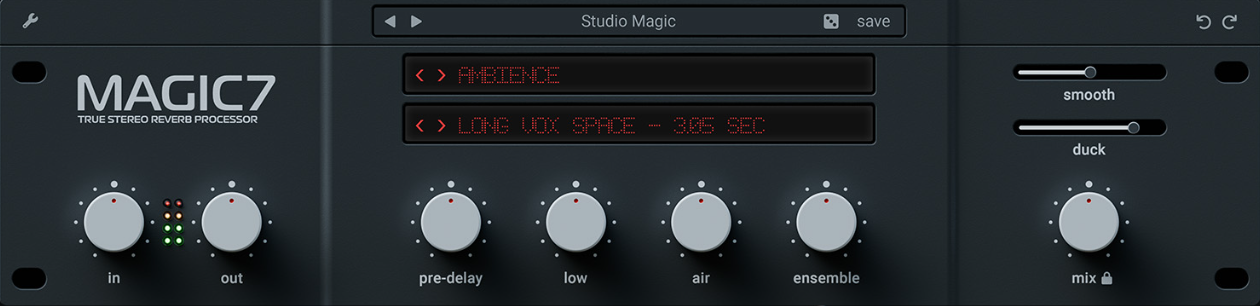
The Bricasti M7 hardware costs about as much as a decent used car, which makes Magic7 slightly absurd: a free plugin carrying all 234 original M7 presets in true-stereo captures.
Wave Alchemy built it as a faithful recreation of the reverb that mastering engineers describe with words like magical, then wrapped custom DSP around the captures.
- 234 M7 Presets
The full factory preset set of the hardware, captured in true stereo and organized into 11 reverb types spanning ambience, rooms, chambers, plates, nonlinear spaces, halls and cathedrals. Since the plugin is preset-based without a conventional decay control, you browse for the right space instead of designing one.
- Smart Browser
Search, tags and favorites keep 234 presets navigable, and a random shuffle button pulls up spaces you would never pick deliberately.
- Modern DSP Layer
Tempo-synced pre-delay, adjustable low and air EQ bands, reverb ducking and transient smoothing all extend the captures past a static library.
- Two Modulation Styles
Flux adds deeper pitch movement and spatialization to the tail, while Ensemble leans toward chorus-style width and thickness. Used gently, either keeps long decays alive without obvious wobble.
EpicPlate MKII by Variety of Sound
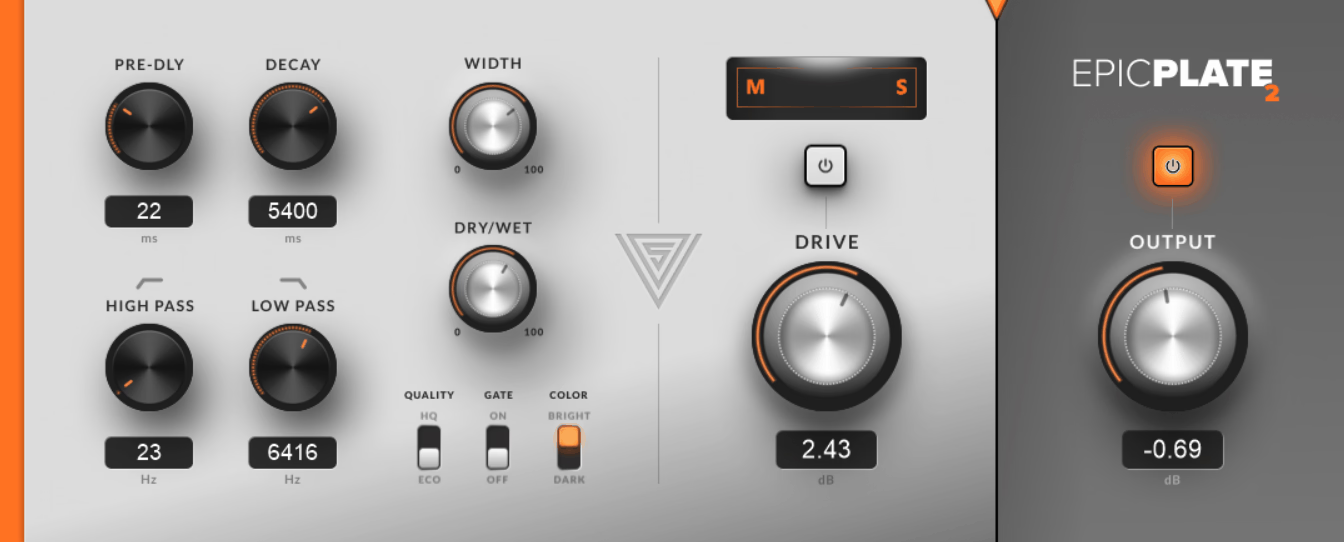
Variety of Sound has quietly shipped some of the best free processing on Windows for years, and epicPLATE mkII continues the run as a modern recreation of classic plate reverberation, successor to the developer’s discontinued and much-loved epicVerb.
- Plate Character
Fast, dense reverb build-up with the distinct tonality that made plates the default vocal and drum treatment for decades, minus digital graininess. The mkII revision brought higher quality processing and a redesigned interface while keeping the original’s character intact.
Its distinctive diffusion behaviour also pairs unusually well with delay effects. The developer points this out directly, and my own ears happily confirm it.
- Drive Knob
Push the input into saturation for tails with genuine weight and attitude, the control that separates this from politer plate emulations. Bedroom Producers Blog called Drive a defining feature of the original release, and it survived the mkII update for good reason.
- Dual Quality Modes
A Quality switch picks between two processing philosophies. ECO mode carries the charm and stereo handling of classic hardware plates, suited to drums, vocals and everyday duties, while HQ raises internal precision and switches to true stereo processing aimed at stereo mixing and mastering.
Valhalla SuperMassive
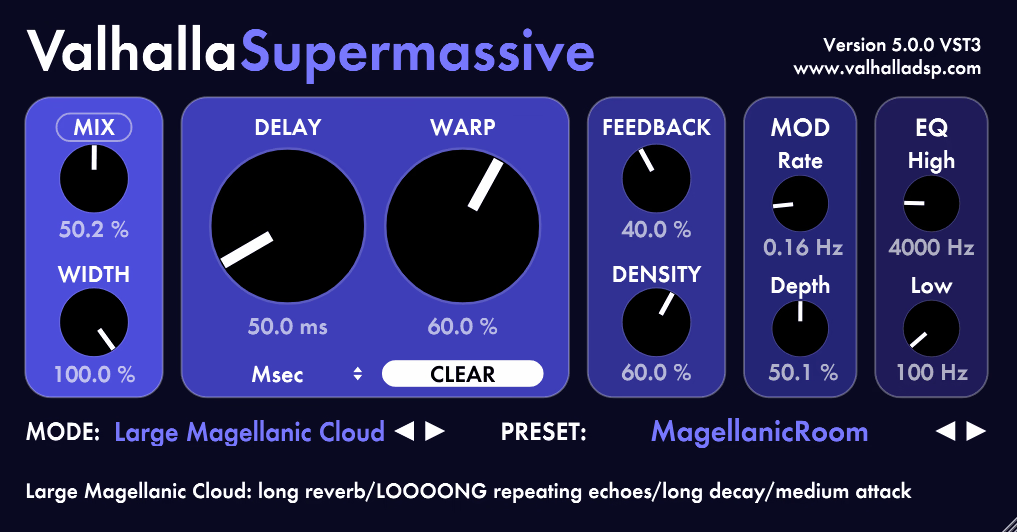
Sean Costello could have charged for this and nobody would have complained. Supermassive is Valhalla’s free playground for massive delays and reverbs, and honest framing first: it is not your plate-and-room utility.
It lives on sends for luscious clouds, otherworldly echoes and feedback swells, and at that job nothing beats it at any price.
- 22 Modes
After the 5.0 update from November 2025, the plugin carries 22 reverb/delay modes, each named after galaxies, nebulae and celestial objects, each a different algorithm topology with its own attack, decay and echo density behaviour. Gemini hits fast with shorter decay, Sagittarius swells slowly into long tails, and Great Annihilator stretches somewhere past the horizon.
Switching modes feels like switching plugins because the internal delay structure genuinely changes.
- Pleiades And Sirius
Pleiades, added in version 4.0, was designed as the smoothest, most natural mode in the set, dense without coloration even at maximum Density. The new Sirius mode brings more powerful Low Cut and High Cut filters than most other modes, making realistic high-frequency decays possible for the first time.
Dragonfly Reverb by Michael Willis
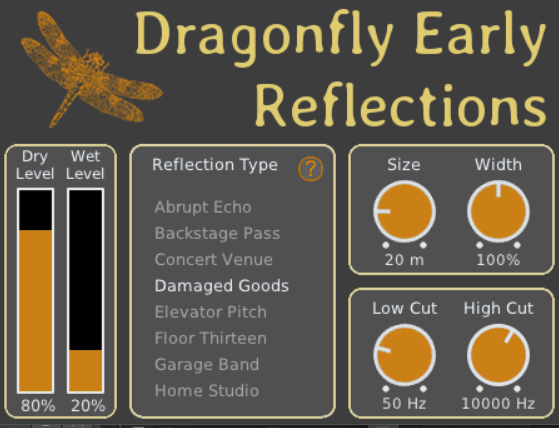
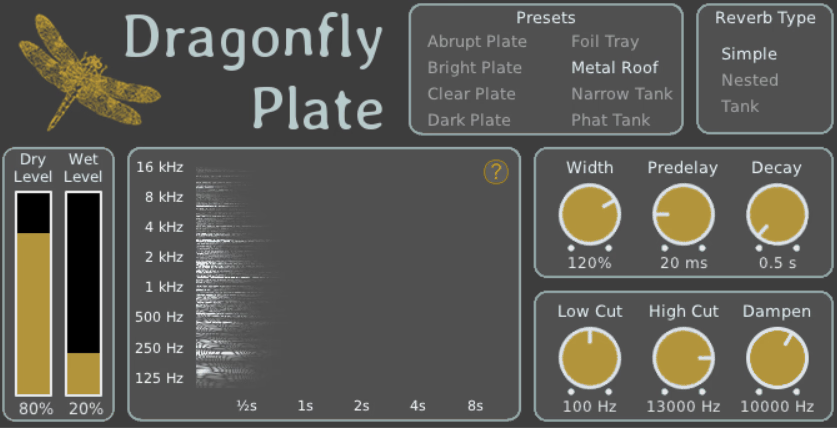
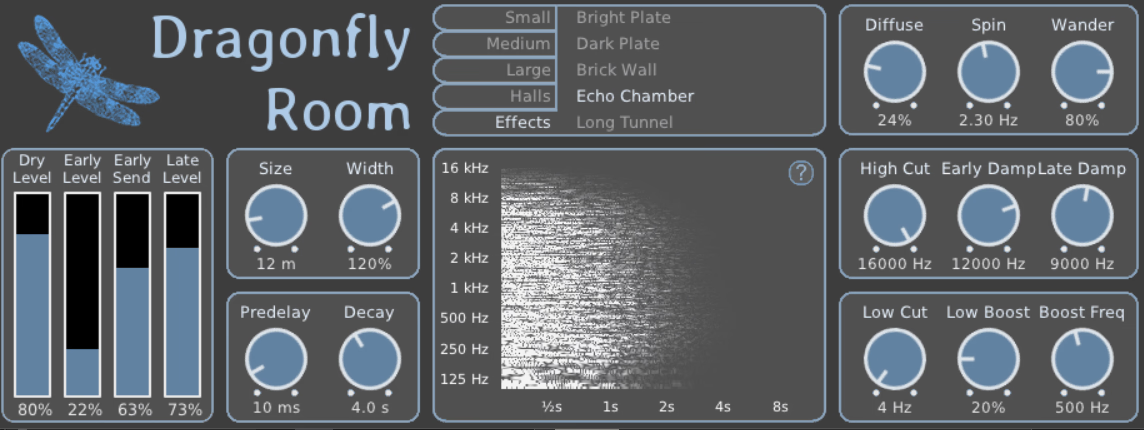
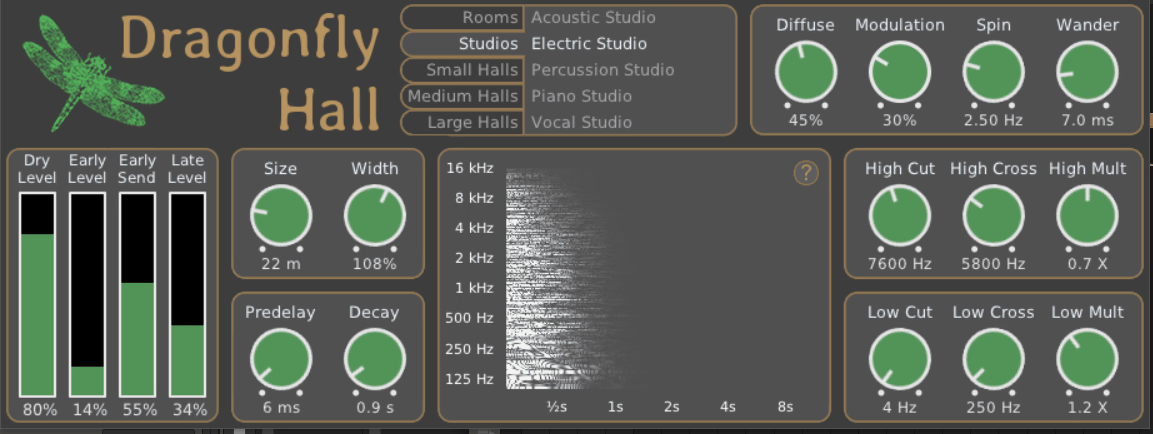
Open source reverb usually means compromise, and Dragonfly Reverb is the exception I point people toward. Michael Willis built it as a bundle of four separate free plugins running on Linux, macOS and Windows under a GPL 3.0 license, with algorithms drawn from the respected Freeverb3 project.
- Four Dedicated Plugins
Hall covers large environments and is where the orchestral warmth lives. Room handles interior spaces with separate control over early and late reflections, plus Spin and Wander parameters modulating the late tail.
Plate works mono-to-stereo with three reverb types, simple, nested and tank, while Early Reflections adds spatial placement without an obvious tail. Loading only the one your track needs keeps sessions light, and each interface stays refreshingly simple.
- Proven Algorithms
The Freeverb3 foundations include Moorer’s early reflection model and an implementation of Jon Dattorro’s Progenitor reverb, academic lineage that shows in the tails. They completely avoid the metallic edge that cheap algorithmic reverbs seem to share, and the halls in particular sound warm.
Willis built the plugins for his own orchestral work, then found guitar bands and electronic producers adopting them too. From my experience the Room plugin covers a surprising amount of everyday mixing.
Denis Tihanov OrilRiver
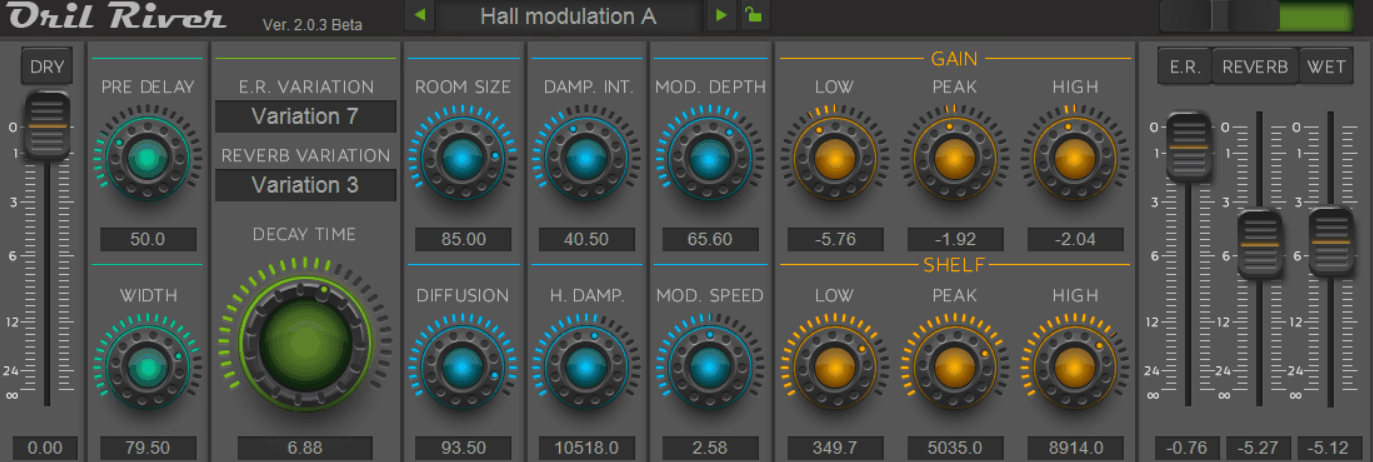
Certain freeware earns a permanent reputation, and OrilRiver has held one for years as the free algorithmic reverb that rivals commercial options.
Denis Tihanov wrote the algorithm in assembly language, pointed it at everything from small rooms to grand halls, and Bedroom Producers Blog called the result possibly the most natural-sounding reverb on the freeware market.
- 12+5 Variations
Twelve early reflection variations and five reverb tail variations combine into a wide range of room signatures with different echo densities. Flipping variations changes the underlying structure in ways single-algorithm freebies cannot approach.
Alongside them sit pre-delay, room size, diffusion, stereo width and decay reaching up to twenty seconds for ambient territory. The parameter set reads like a serious paid reverb because it behaves like one.
- Dual Damping
Standard damping pairs with a separate damping intensity control governing specifically how fast high frequencies die in the tail. Natural, dark decays on acoustic sources come together easily here, exactly the territory where most cheap reverbs fall apart first.
Vocals, acoustic guitar and piano all benefit from that second control. It is a small design decision with outsized results.

Hey, I’m Viliam, I started Music Circuit to write about plugins and gear, so you always know what’s new and what’s worth trying. You’ll also find guides and tips here to help you get started, whether you’re picking your first plugin or building out a full studio.