When you purchase through the links on my site, you support the site at no extra cost to you. Here is how it works.
Phasing has a strange reputation among effects. Everyone recognises that swirling, whooshing movement running through classic rock guitars, disco drums and vintage synth records, yet most producers rarely open the stock phaser in their DAW.
They can sound subtle, psychedelic, rhythmic or completely experimental, and the best choice depends on how far you want to push the effect.
In this guide to the best phaser plugins, I’ve focused on the features that actually change how you can use each one, from vintage circuit emulations to modern spectral processors and genuinely useful free options.
1. Minimal Audio Ripple Phaser
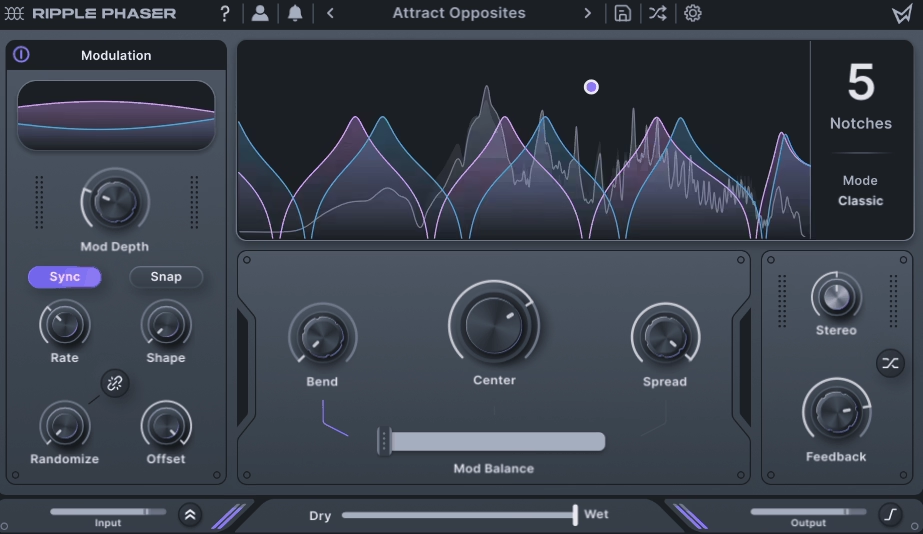
Ripple Phaser is one of the most interesting modern approaches to phasing because it treats the effect as a spectral sound-design tool, not just a way to create the familiar swirling sweep.
What you get in detail:
- Up to 24 Notches, 7 Modes
Ripple Phaser can create up to 24 notches, giving you considerably more spectral complexity than a typical vintage-style phaser. Its 7 modes include conventional phasing alongside hybrid phaser/filter configurations and an all-pass dispersion mode.
That combination immediately gives it a different identity. You aren’t limited to moving a familiar row of notches back and forth; you can use the effect to shape the frequency spectrum much more aggressively.
- Center Frequency, Center Spread and Bend
The Center Frequency determines where the notches or filters are positioned, while Center Spread controls their spacing. Bend pushes the notches toward either the low or high end of the spectrum, making it especially useful in the filter modes.
I find Bend particularly valuable when a conventional phaser feels too evenly distributed across the signal. You can concentrate the movement around a useful frequency region instead of processing everything equally.
- 4 LFO Shapes and Continuous Morphing
The modulation section provides sine, triangle, downward-ramp and square shapes, and you can continuously morph between them when shape snapping is disabled.
Randomization, stereo randomization and stereo offset add another layer of movement. Stereo Offset changes the phase relationship between the two LFO channels, so you can create width and motion without simply adding a separate stereo-widening effect.
2. Eventide Instant Phaser Mk II
Released in 1972, the Eventide Instant Phaser Mk II recreates one of the landmark studio phasers and focuses heavily on the character of its original analog design.
Rather than competing with modern phasers through an enormous number of controls, it gets much of its appeal from the way Eventide approaches the original circuitry.
- 3 Modes, 4 Control Methods
Eventide gives you 3 modes: Shallow, Deep and Wide, plus 4 ways to control the phasing: Manual, Oscillator, Envelope and Remote.
Manual is ideal for automation, Oscillator provides continuous modulation, Envelope makes the effect respond to the incoming signal, and Remote maps the phasing control to a MIDI mod wheel.
- Age
The Age control is the feature that makes this particular emulation stand out. Eventide modeled the way component values in analog hardware drift over time, affecting both the phase-shift networks and the LFO.
That means you aren’t simply adding an “old” preset. Age changes the behaviour of the modeled circuitry, giving you another way to move between cleaner and more characterful versions of the effect.
- Wide Stereo Operation
The Wide mode uses different amounts of phase shifting on the left and right channels, creating a pseudo-stereo effect.
This can work particularly well on mono guitars, keyboards and single-channel synthesizers, where the phaser itself becomes part of the stereo image.
- Sync, Retrig and Feedback
The oscillator includes Sync and Retrig, while Feedback lets you make the phase response considerably more pronounced.
3. Soundtoys PhaseMistress
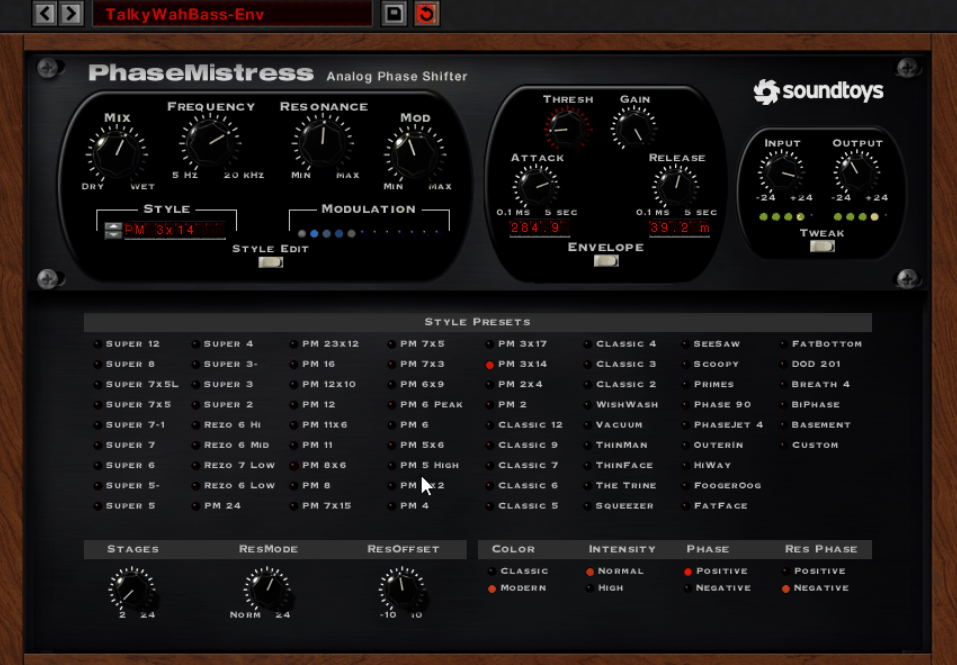
PhaseMistress takes the opposite approach from Eventide: instead of recreating one particular piece of hardware, Soundtoys studied a wide range of classic phasers and turned their characteristics into one deeply customizable instrument.
Soundtoys specifically cites designs including the Bi-Phase, Boss Super Phaser, Phase 90, Moogerfooger 12-Stage, Small Stone and Trine as part of its development references.
- 69 Styles, 2–24 Stages
The headline numbers are 69 circuit styles and a 2-to-24-stage range. The styles change the internal phasing structure rather than merely recalling different knob positions, while the Stage control lets you build your own variations on top of those circuits.
- 6 Operation Modes
The plugin provides 6 operation modes, covering conventional LFO modulation as well as Rhythm, Step, Random and Envelope-style processing.
This is one reason I consider PhaseMistress much more versatile than a normal guitar phaser as you can create a traditional sweep, make the phase position jump rhythmically or make it respond directly to the performance.
- Custom LFO Curves
The Tweak panel lets you draw your own LFO shapes, rather than limiting you to a few factory waveforms.
- Rhythm Mode
Rhythm mode lets you program tempo-locked rhythmic patterns, making the phaser respond almost like a rhythmic sequencer. On drums and percussion, I can use it to create movement that feels integrated into the groove rather than simply sweeping underneath it.
- Envelope Mode
The envelope follower makes the phasing respond to the dynamics of the input. That can be particularly effective on drums, slap bass, rhythm guitar and other transient-heavy material.
- Resonance, Color and Intensity
The deeper controls include Resonance, Color and Intensity, allowing you to change the tonal character without abandoning the selected circuit style.
4. D16 Fazortan 2
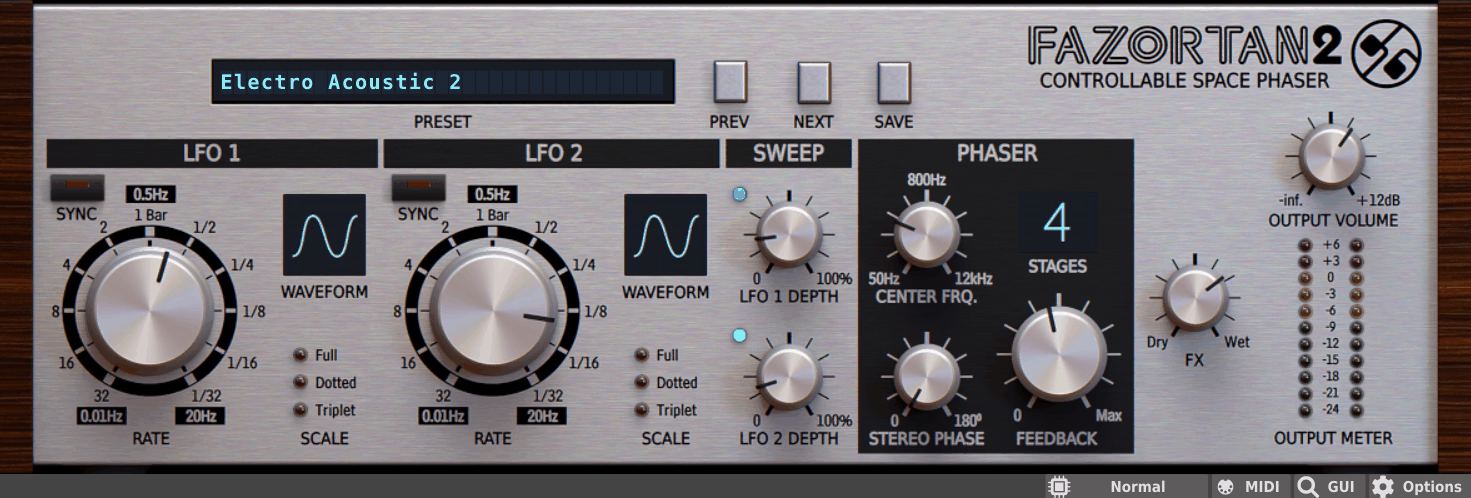
The appeal of Fazortan 2 is its combination of an analog-inspired phasing character with considerably more modulation control than the hardware that inspired it.
D16 modeled the phase-shifting circuitry while expanding the instrument around it, so you aren’t locked into the limitations of a vintage front panel.
Fazortan 2 includes 2 LFOs, and each provides 7 waveform choices including triangle, sine, hyper-triangle, sawtooth, square and sample-and-hold shapes.
The LFO rate can run from 0.01 Hz to 20 Hz when free-running, or synchronize to the host tempo.
Using both LFOs together is where I find the plugin particularly interesting. One can provide slow overall movement while the other introduces a second layer of modulation.
- Stereo Phase
A dedicated Stereo Phase control changes the phase relationship between the left and right LFO signals. Instead of applying a generic widening algorithm after the fact, the stereo movement is built into the modulation itself.
- Variable Stage Count
The Number of Stages control determines the complexity of the phase response, while Feedback increases the resonance and intensity of the effect.
This gives Fazortan 2 a useful progression from fairly restrained analog-style movement into thicker and more pronounced phasing.
5. Moog Moogerfooger MF-103S
The Moog MF-103S brings the modular philosophy of the original Moogerfooger hardware into plugin form, and that makes it one of the more distinctive options here.
The original MF-103 combined a phaser with a wide-range voltage-controlled LFO, and the software version retains that architecture while adding features that make sense inside a DAW.
- 6/12 Stages, Multiple CV Inputs
The phaser can operate in 6-stage or 12-stage configurations, while the virtual CV system exposes control over parameters including LFO Rate, LFO Amount, Resonance and Phaser Sweep.
There is also a second Sweep input that can independently modulate the two banks of six stages.
That is where the MF-103S moves beyond being a simple recreation. You can make different parts of the phase network move against one another, creating much more complicated modulation.
- 2 LFO Modes
The LFO section supports the original mono behaviour as well as an inverted stereo LFO mode.
The latter gives you a straightforward way of introducing movement between the left and right channels while retaining the recognizable Moog character.
- Wide-Range LFO
The LFO covers a very broad frequency range, extending from extremely slow modulation into much faster territory.
At slower settings, it is excellent for slow psychedelic movement, while faster modulation can push the effect toward more synthetic and harmonically active territory.
- Stereo Operation
The software version also provides additional stereo output options, making the plugin more flexible in a DAW than the original pedal-style hardware.
I particularly like the MF-103S on synths because the CV philosophy makes the phaser feel like another element of the sound-generation architecture rather than a finishing effect.
6. BLEASS Phase Mutant
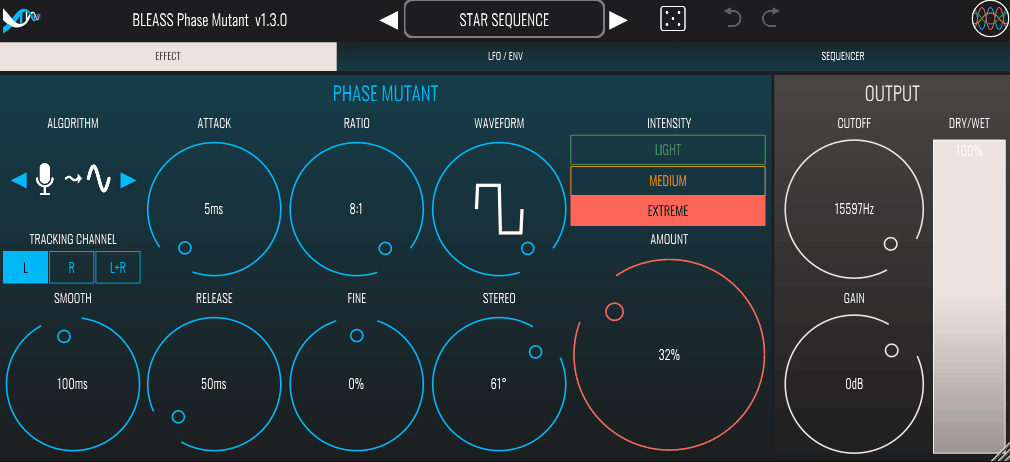
This phaser is the most unconventional option among the paid plugins because BLEASS doesn’t approach phasing as a traditional all-pass sweep.
Phase Mutant applies frequency-modulation principles to incoming audio, producing sounds that can move from subtle harmonic colouration into outright electronic mutation.
Phase Mutant provides 3 algorithms: Oscillator Modulates Input, Input Modulates Oscillator and Input Modulates Itself, where each changes the relationship between the source and the generated signal, so the resulting texture can be completely different even with similar settings.
- Sine-to-Square Waveform Morphing
The oscillator can morph continuously from sine through triangle and sawtooth to square, changing the harmonic content as you move through the waveform.
Automating that control is one of the easiest ways to make a static source evolve without changing the underlying patch.
- 4 Modulation Sources, 2 LFOs
There are 4 modulation sources, each capable of targeting two parameters, along with 2 LFOs for additional cyclic modulation.
A graphical modulation sequencer adds another way to produce rhythmic movement.
- Pitch Tracking
Real-time pitch tracking determines the frequency of the generated oscillator, while controls such as Tracking Channel and Smooth determine how the analysis responds to the incoming signal.
That is particularly useful on monophonic vocals, basses, leads and melodic synths where keeping the effect musically related matters.
- Transient Envelope
The envelope follower responds to incoming transients and can target multiple parameters, making it possible to let drums and percussion drive the mutation.
7. Softube Fix Phaser
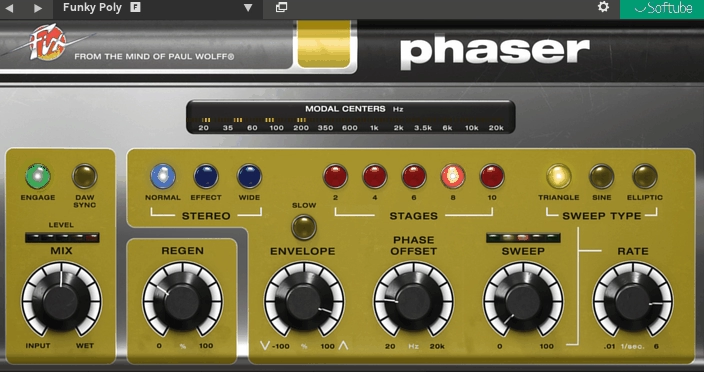
Fix Phaser is a more traditional design, but Softube gives it enough modulation and stereo flexibility to make it useful beyond basic vintage sweeps.
You can select 2, 4, 6, 8 or 10 stages, with Triangle, Sine and Elliptic sweep shapes.
The stage count directly affects the number and intensity of the phase notches, while the waveform changes how the movement travels through the sweep.
- 3 Stereo Modes
The plugin provides Normal, Effect and Wide stereo modes. The Wide setting is particularly useful when I want to add movement to static stereo material without reaching for chorus or a dedicated stereo effect.
- Envelope Follower
An integrated envelope follower can influence the phaser movement, with Fast and Slow response settings.
Fast response suits drums, rhythmic guitar and other transient-rich sources, while the slower setting makes more sense on sustained chords, pads and synths.
Freebies:
1. Kilohearts Phaser
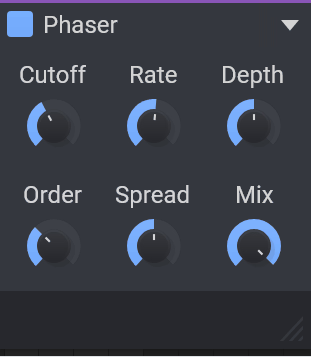
The Kilohearts Phaser is deliberately simple, and that is exactly why I like it as a free everyday option. The phaser has 6 core controls: Cutoff, Rate, Depth, Order, Spread and Mix.
When it comes to Order, it determines how complex the phaser’s filter structure becomes. Higher settings create more pronounced peaks and troughs in the spectrum, while lower settings keep the effect more restrained.
- Stereo Spread
Spread offsets the modulation between the left and right channels, providing a simple way to create stereo movement.
- Snapin Workflow
The plugin can run as a normal effect in your DAW or as a Snapin inside compatible Kilohearts hosts.
That makes it particularly useful when you want to build a larger modular processing chain. For example, combining the phaser with multiband processing can let you apply the movement to selected frequency regions rather than the entire signal.
2. CHOW Phaser
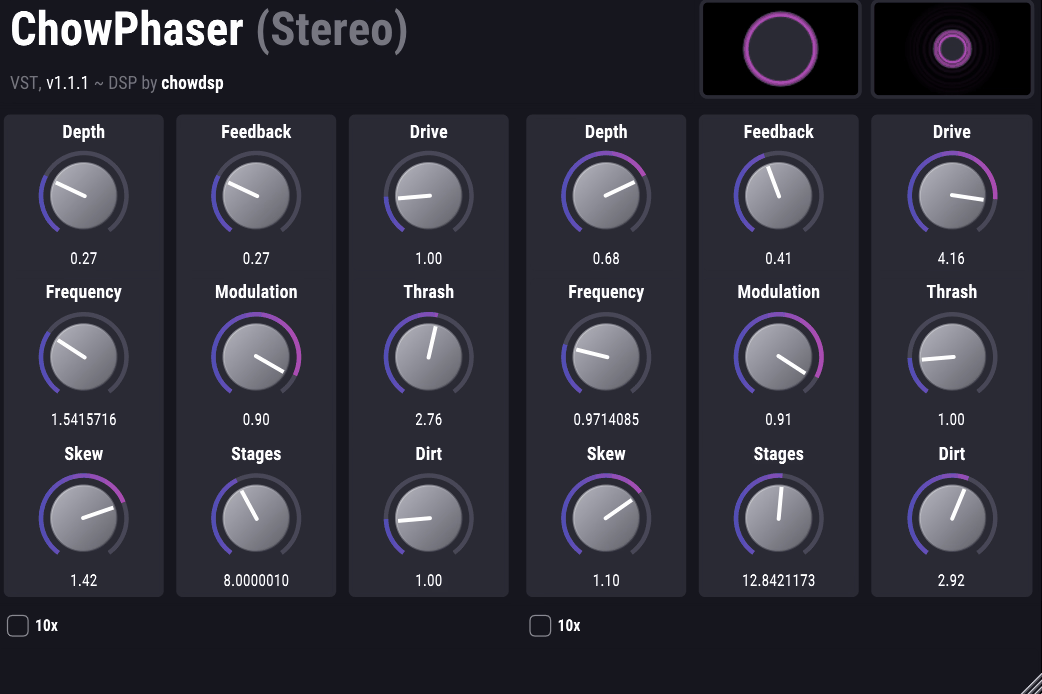
This one is an open-source phaser inspired by the Schulte Compact Phasing ‘A’, but CHOW Phaser adds its own nonlinear processing and modulation behaviour rather than attempting to be a strict hardware recreation.
The design separates feedback and modulation behaviour, giving you independent control over the two parts of the effect. That makes it easier to create a phaser that behaves more dynamically than a simple single-feedback design.
- Skewed LFO
The LFO includes a Skew control modeled around the behaviour of light-dependent resistor-based modulation. Instead of simply changing the speed or depth of the sweep, Skew changes how the modulation moves through its cycle.
I find that particularly useful when a standard symmetrical LFO sounds too predictable.
- Nonlinear Filters
Nonlinear filters add warmth and dirt to the signal path, allowing CHOW Phaser to move beyond an entirely clean digital sound.
You can therefore use it for subtle vintage color or push it toward considerably rougher sound-design territory.
3. HY-Phaser
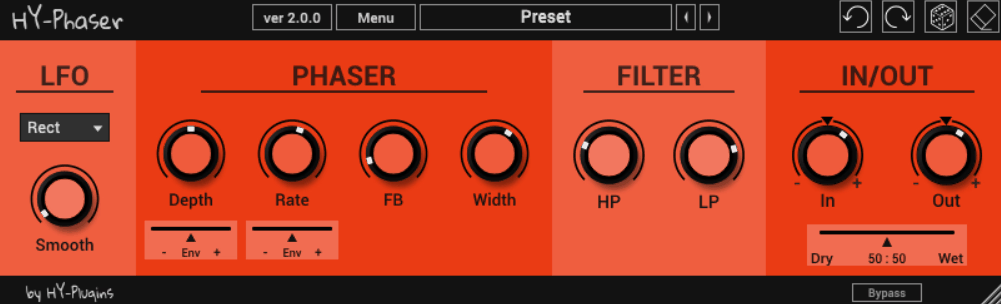
HY-Phaser is an older freeware option, but its modulation system still gives it a reason to exist on this list. The key attraction is the way it uses envelope followers to make the effect react to the performance.
In addition, three envelope followers can independently influence Depth, Feedback and Wet Volume. That is considerably more flexible than simply connecting one envelope to the phaser’s overall intensity.
For example, you can make the depth respond quickly to transients while the feedback rises more slowly behind sustained material.
- 6 LFO Shapes
The modulation section includes Sine, Triangle, Up, Down, Rectangle and Random shapes, covering both conventional sweeps and more unpredictable movement.
4. Blue Cat’s Phaser
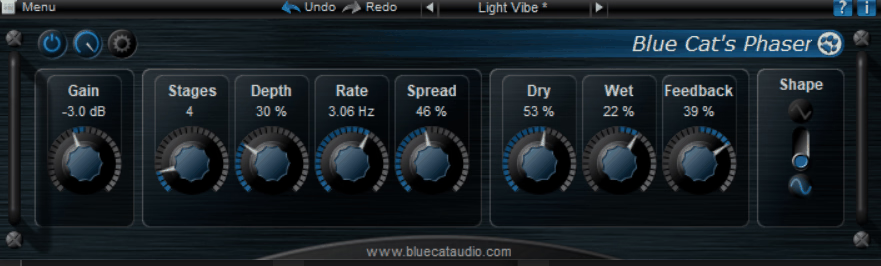
It’s one of the most capable free phasers here, particularly if you want a large stage range without paying for a premium processor. With Blue Cat’s Phaser, you can use up to 32 phasing stages, which is far beyond the stage counts associated with many classic hardware phasers.
At modest settings, it can produce subtle movement; at high stage counts, the response becomes much denser and more useful for experimental processing.
- Sine and Triangle LFOs
The modulation section provides Sine and Triangle LFO shapes, keeping the core operation straightforward.
- MIDI and Automation
Parameters can be controlled through MIDI and host automation, with MIDI Learn available as well.
That matters more than it might initially seem. A free phaser becomes much more useful when you can automate its movement precisely throughout a track.

Hey, I’m Viliam, I started Music Circuit to write about plugins and gear, so you always know what’s new and what’s worth trying. You’ll also find guides and tips here to help you get started, whether you’re picking your first plugin or building out a full studio.