
If you’ve spent any real time browsing plugin bundles or shopping for a MIDI keyboard, you’ve probably landed on this exact question at some point. Both Arturia and Native Instruments are among the biggest names in music production, and both have built entire ecosystems around their software and hardware.
Neither brand is simply “better” overall. They’re based on different philosophies, so once you grasp each one’s aims, choosing between them becomes much easier.
In this guide, I’ll go deep on software, sound design tools, hardware, community, support, deals, and the overall strengths and weaknesses of each brand. I’ll try to be upfront about where each one genuinely earns its reputation and where it falls short.
Arturia vs Native Instruments: Quick comparison
| Category | Arturia | Native Instruments |
|---|---|---|
| Core software strength | Vintage synth and keyboard emulations | Sampling, orchestral, and cross-genre production tools |
| Flagship bundle | V Collection | Komplete 26 |
| Modern flagship synth | Pigments | Massive X |
| Deep sound design tools | Augmented Series, Pigments | Reaktor 6, Absynth 6, Kontakt Libraries |
| Effects bundle | FX Collection | iZotope, Brainworx, and Plugin Alliance tools within Komplete |
| Guitar processing | Not available | Guitar Rig 7 Pro |
| Sampler engine | Not available | Kontakt |
| Storage footprint | Lighter, around 20GB for V Collection | Much larger, up to 1TB+ at top Komplete tiers |
| Hardware controllers | KeyLab MK3 series | Komplete Kontrol S-series MK3 |
| Hardware synths | MiniFreak, PolyBrute, MicroFreak, AstroLab, and more | None directly comparable |
| Beat production hardware | Not a focus area | Maschine |
| Software manager | Arturia Software Center | Native Access |
| Community and support | Personal but inconsistent as company scales | Large and active, but slow support tickets |
| Company stability | Independent, no recent ownership changes | Recently acquired by inMusic after 2026 insolvency |
| Update policy on flagship synth | Free major updates for existing owners | Paid upgrades typical for major versions |
Arturia is known for recreating classic analog and vintage synthesizers with attention to accuracy and hands-on playability, establishing a strong reputation among musicians and producers.
Their software plugins are modeled directly on hardware history, and their own physical synths like the PolyBrute and MiniFreak carry that same DNA into real analog and hybrid circuitry. In contrast,
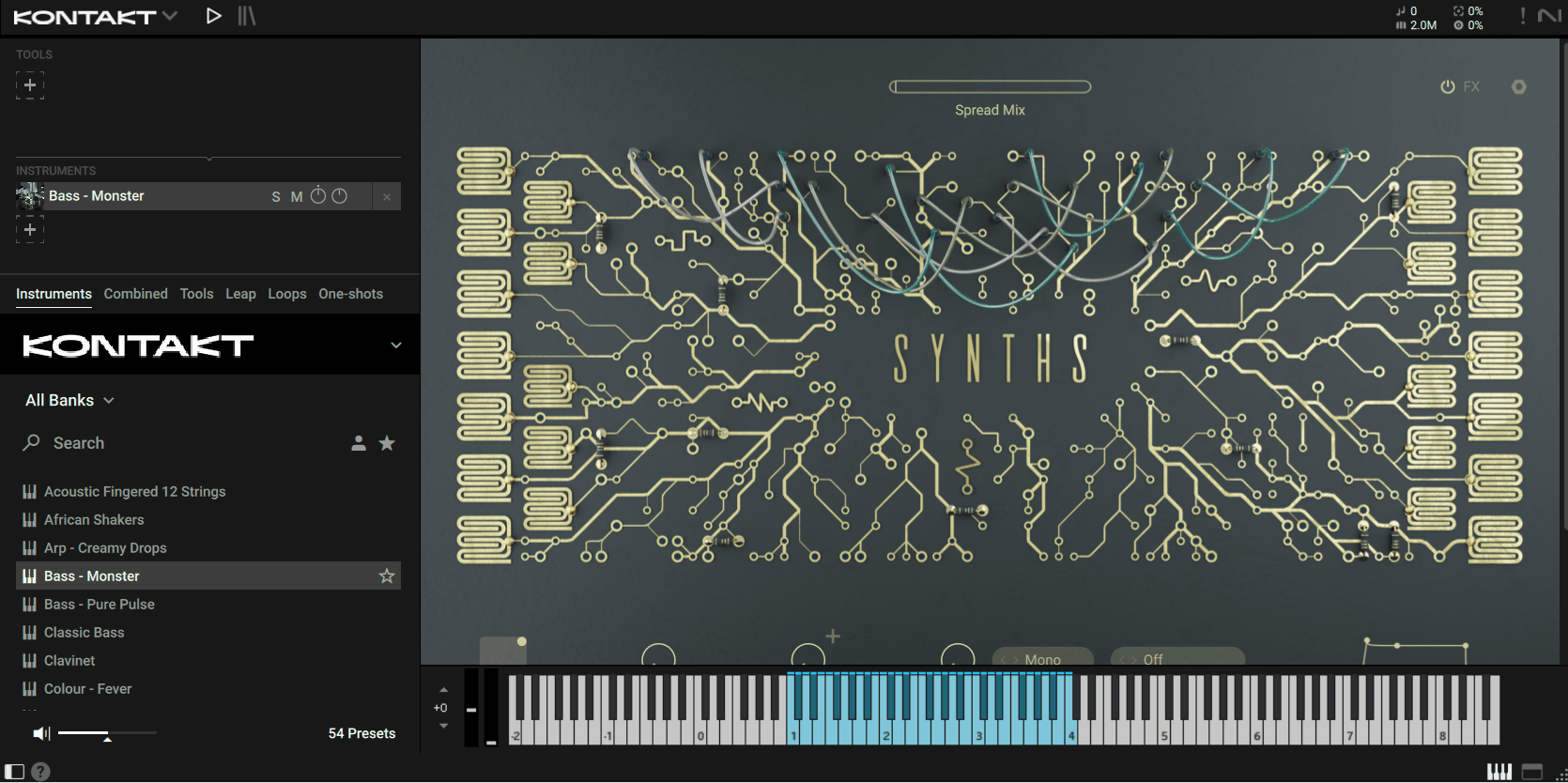
On the flip side, Native Instruments earned recognition for Kontakt, its sampling engine, and built upon this foundation with an extensive catalog of instruments, effects, and production tools developed by numerous third-party collaborators.
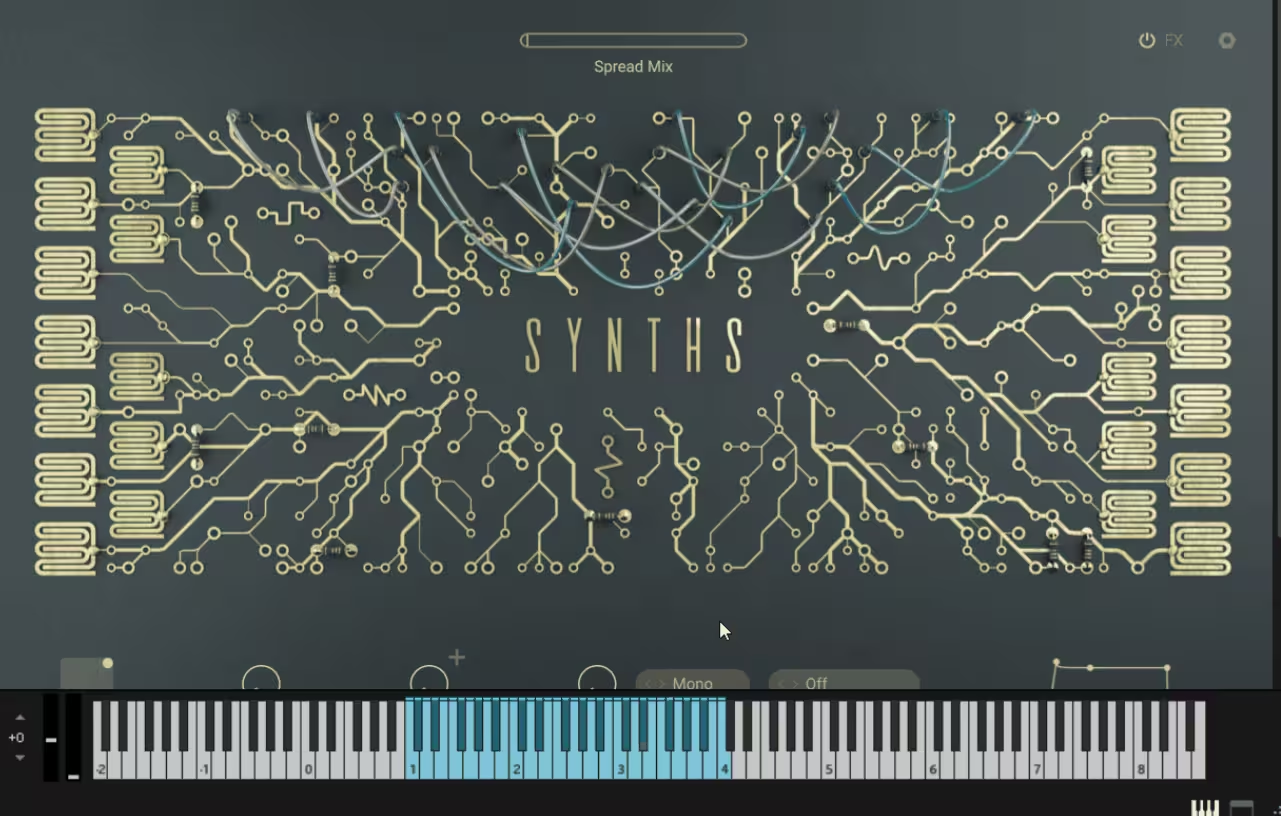
The Komplete bundle is less a single cohesive product and more a sprawling toolkit assembled from many different sources.
It’s also important to flag a significant recent development affecting both stability and trust. In early 2026, Native Instruments entered preliminary insolvency proceedings and, after several months seeking a buyer, was acquired by inMusic, which also owns Akai Professional, Moog Music, Denon DJ, and M-Audio.
Both companies claim that products, licenses, and support will continue as normal, with the deal also bringing iZotope, Plugin Alliance, and Brainworx under shared ownership.
I think it’s fair to treat this as a recent, still-settling situation rather than a finished story, so it’s worth checking NI’s own channels for the latest information before making a large purchase.
Arturia, by contrast, has remained a privately structured, independently run company throughout, without any comparable ownership turbulence. This difference alone matters more than most buying guides give it credit for.
Software Plugins: Komplete vs V Collection
This is usually where the comparison starts, and it’s genuinely the area where the two brands diverge the most.
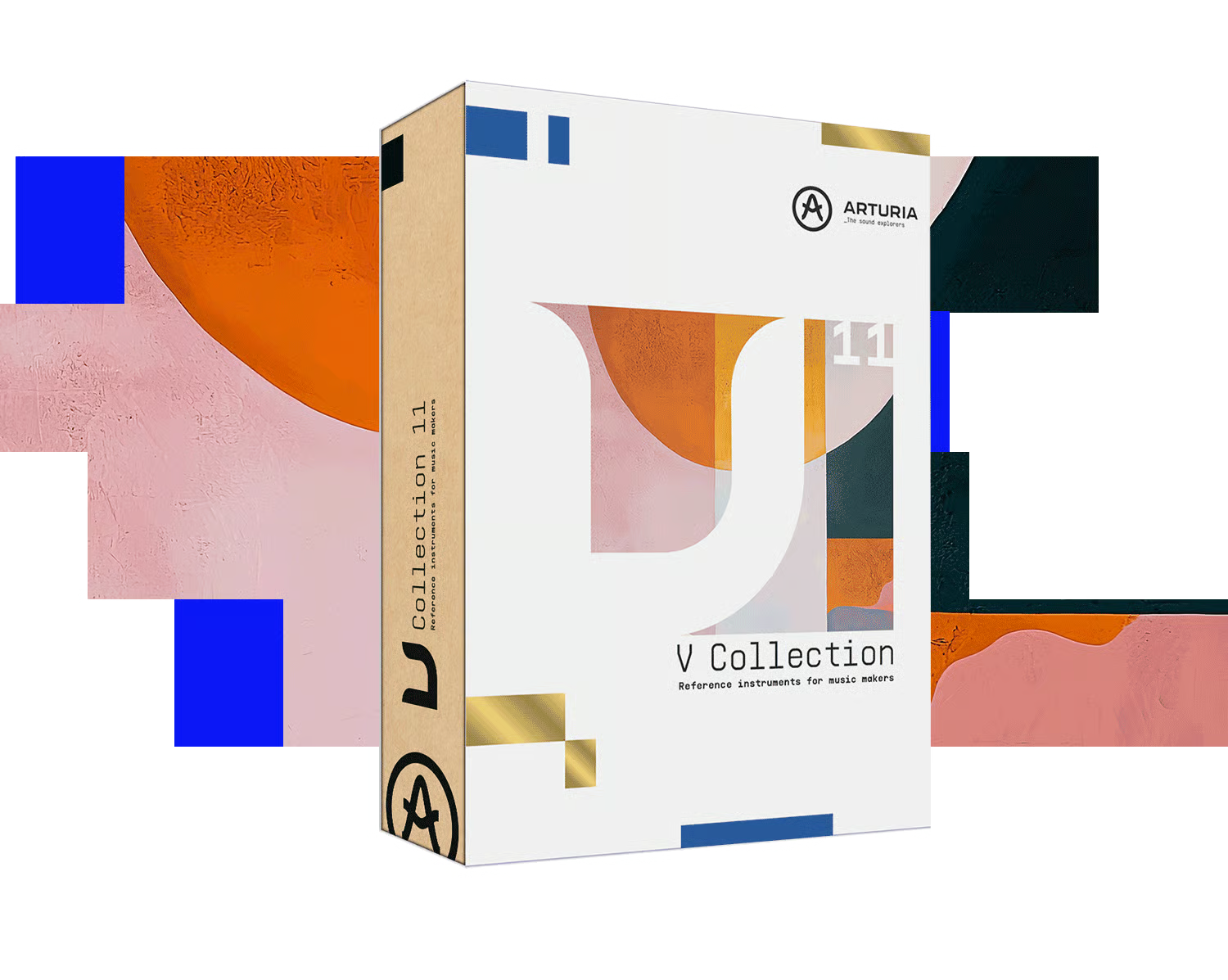
Arturia’s flagship bundle is V Collection, currently at version 11, and it’s built almost entirely around vintage synthesizer emulations powered by Arturia’s own TAE (True Analog Emulation) modeling technology.
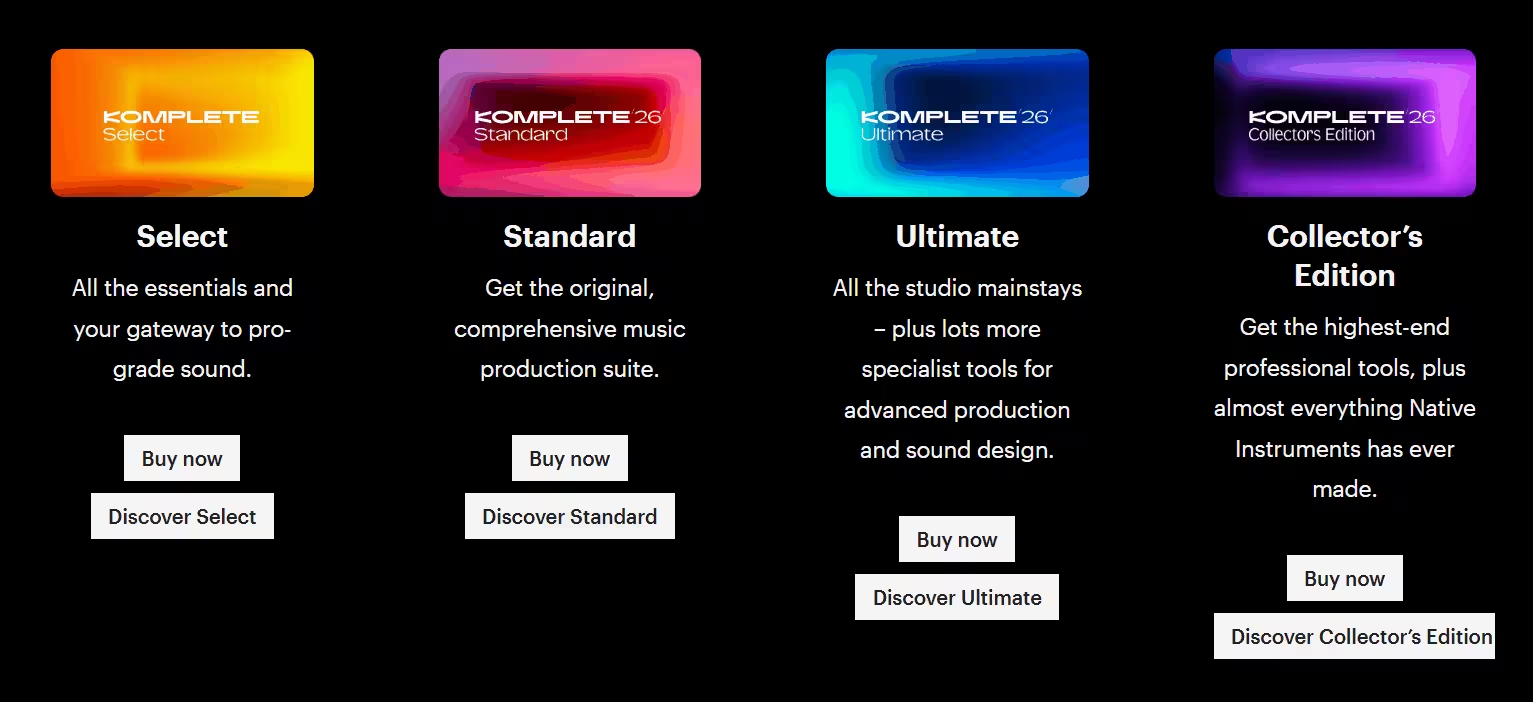
Native Instruments’ flagship bundle has recently been rebranded from Komplete 15 to Komplete 26, moving to a year-based naming scheme.
It spans multiple tiers, from a free Komplete Start entry point up through Select, Standard, Ultimate, and a full Collector’s Edition, and it isn’t just synths; it covers sampled instruments, orchestral libraries, drum machines, guitar processing, and mastering tools all in one package.
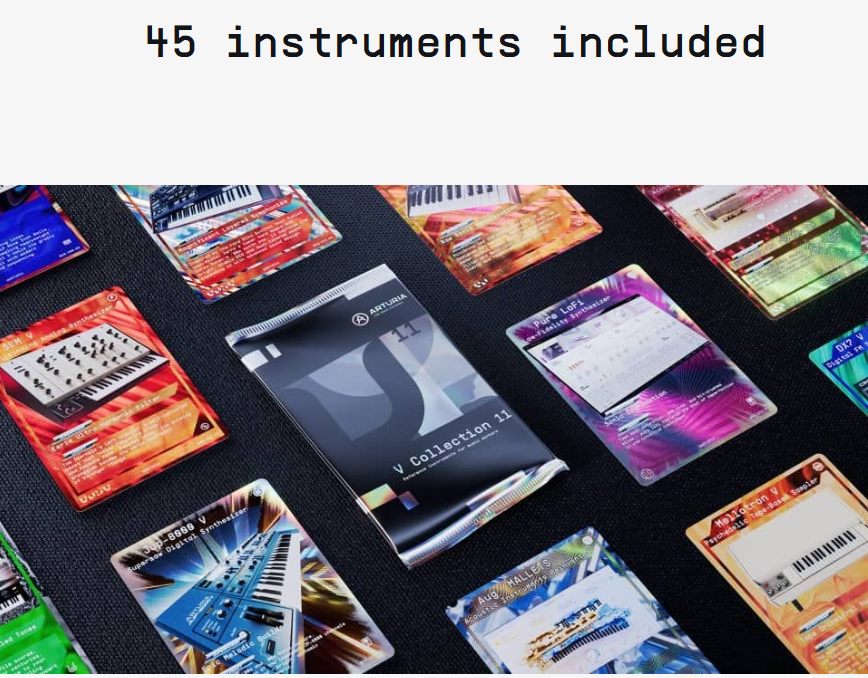
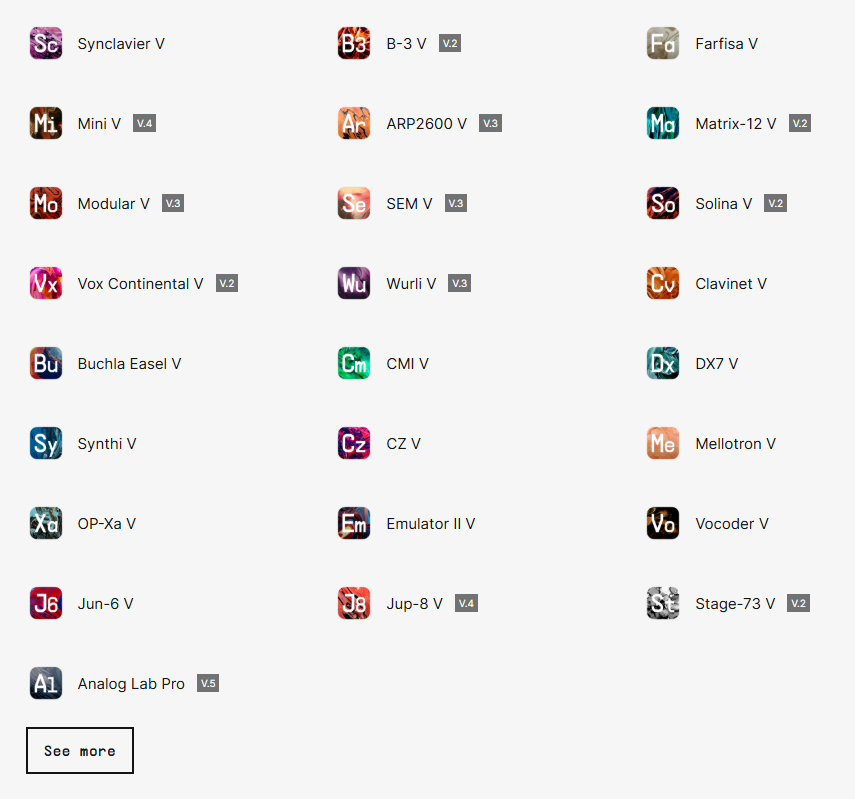
- V Collection focuses almost exclusively on vintage keyboards and synths.
Think Minimoog (Mini V), Jupiter-8, Prophet-5, CS-80, DX7 V, Hammond B-3, Rhodes Stage-73 V, and Wurlitzer style emulations, alongside Arturia’s own modern flagship synth, Pigments.
If your sound leans on classic keyboard and synth textures, this is a genuinely focused, well-built toolkit with over 45 individual instruments.
- Komplete covers a much wider range of production needs
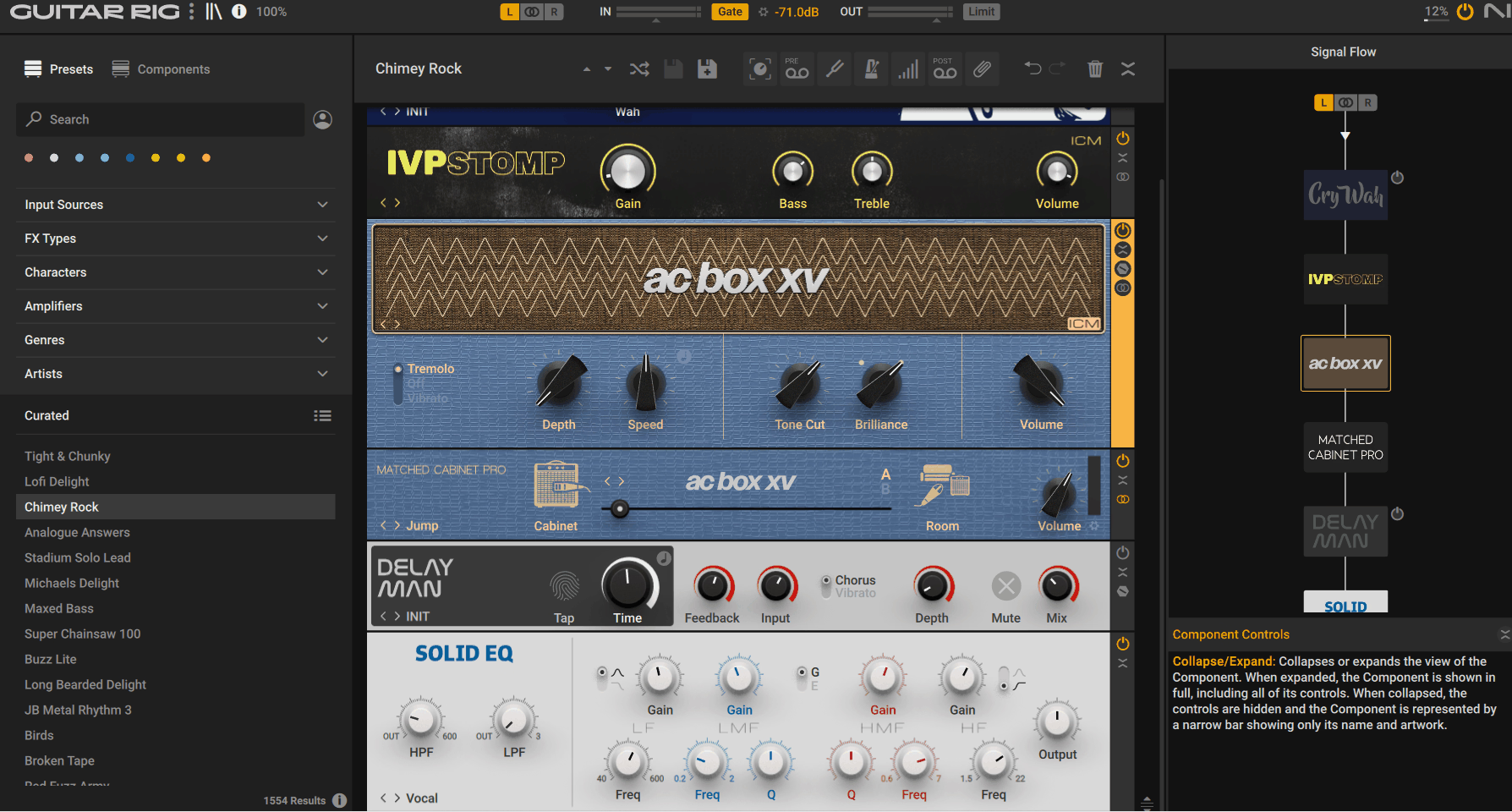
Sampled acoustic instruments, orchestral sections, drum libraries like Battery 4, guitar amps via Guitar Rig 7 Pro, vocal tools, and mastering software via Ozone all sit within the higher Komplete tiers.
- It’s built for producers who need one bundle to cover several completely different genres.
- Storage footprint is wildly different between the two
V Collection is relatively light, around 20GB depending on installation. Komplete, especially higher tiers, can exceed 1TB.
- Pricing structures differ too
V Collection offers a single tier with an intro option. Komplete has multiple pricing levels, with the Collector’s Edition costing much more than the V Collection.
Both brands run frequent sales, so actual prices swing a fair amount throughout the year.
I’d say if your work focuses on vintage synth sounds, V Collection may justify its price. For those requiring a broader toolkit that encompasses sampling, orchestral content, and mixing tools in one suite, Komplete offers extensive options, despite any transitions in its ownership.
Sound Design: Where Both Brands Actually Get Deep
This section of the comparison may warrant more attention than what is found in most guides, as it highlights distinct characteristics of each brand. Here, sound design refers to tools intended for shaping and building original sounds, beyond the playback of presets.
On the Native Instruments side, the sound design story runs through several distinct pillars. Kontakt itself is the foundation, a full sampling and scripting engine that powers not just NI’s own instruments but a massive third-party ecosystem of Kontakt Libraries built by outside developers, covering everything from orchestral sections to obscure world instruments to experimental textures.
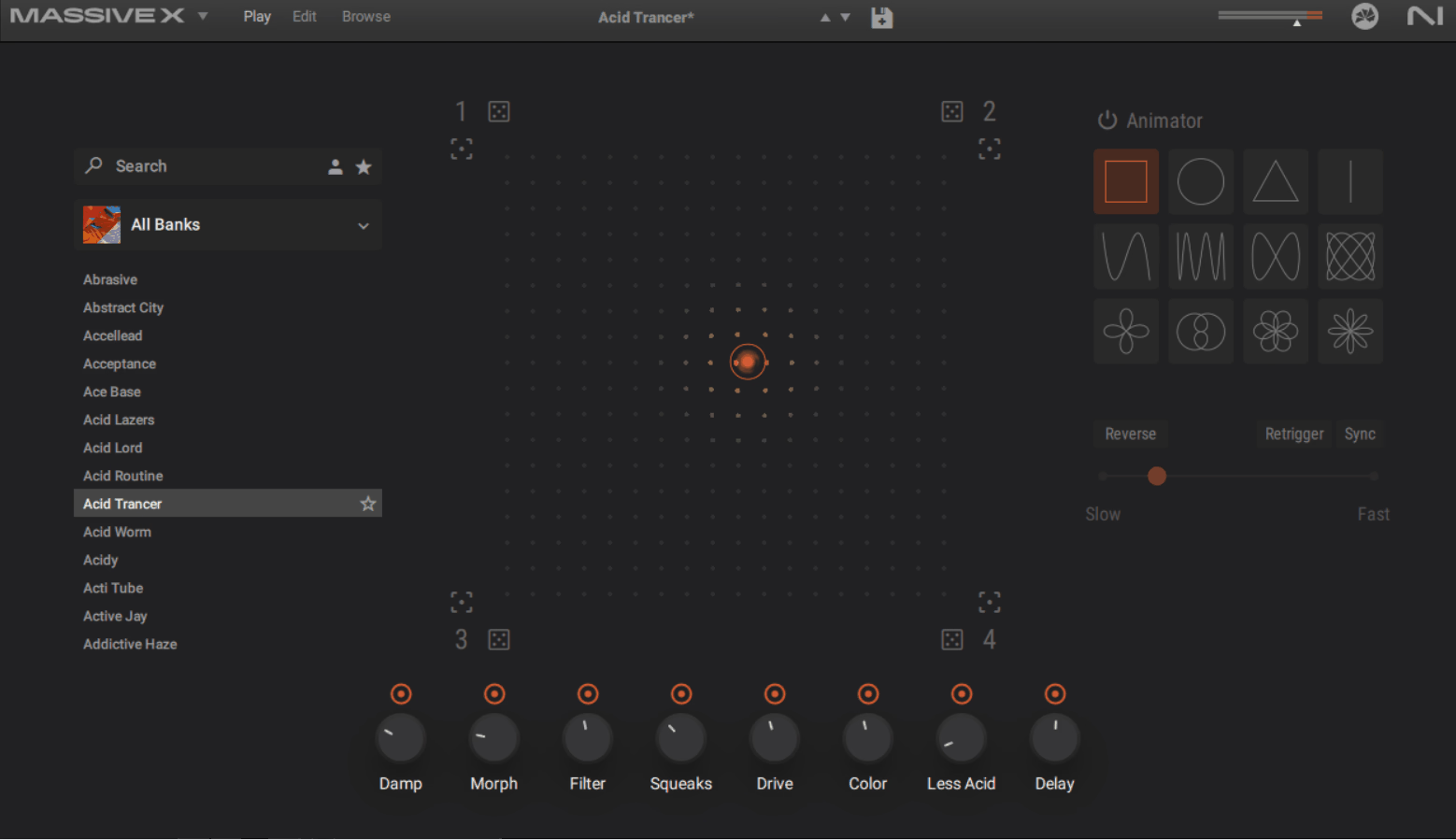
- Massive X
It’s a flagship wavetable synth, built as the successor to the original Massive, and it leans into complex modulation and a dense, evolving wavetable engine rather than the simpler, punchier character its predecessor was known for.
It’s a capable modern sound design tool in its own right, though its update pace has been slower than Arturia’s for Pigments over the same period.
- Reaktor 6
This synth is Native Instruments’ modular sound design environment, and it’s genuinely one of the deepest tools either brand offers.
Reaktor 6 lets you build entirely custom synths and effects from the ground up using Blocks. Blocks are modules inspired by Eurorack, a modular synthesizer format popular in electronic music, that you patch together. The surrounding community shares thousands of user-built instruments and patches for free.
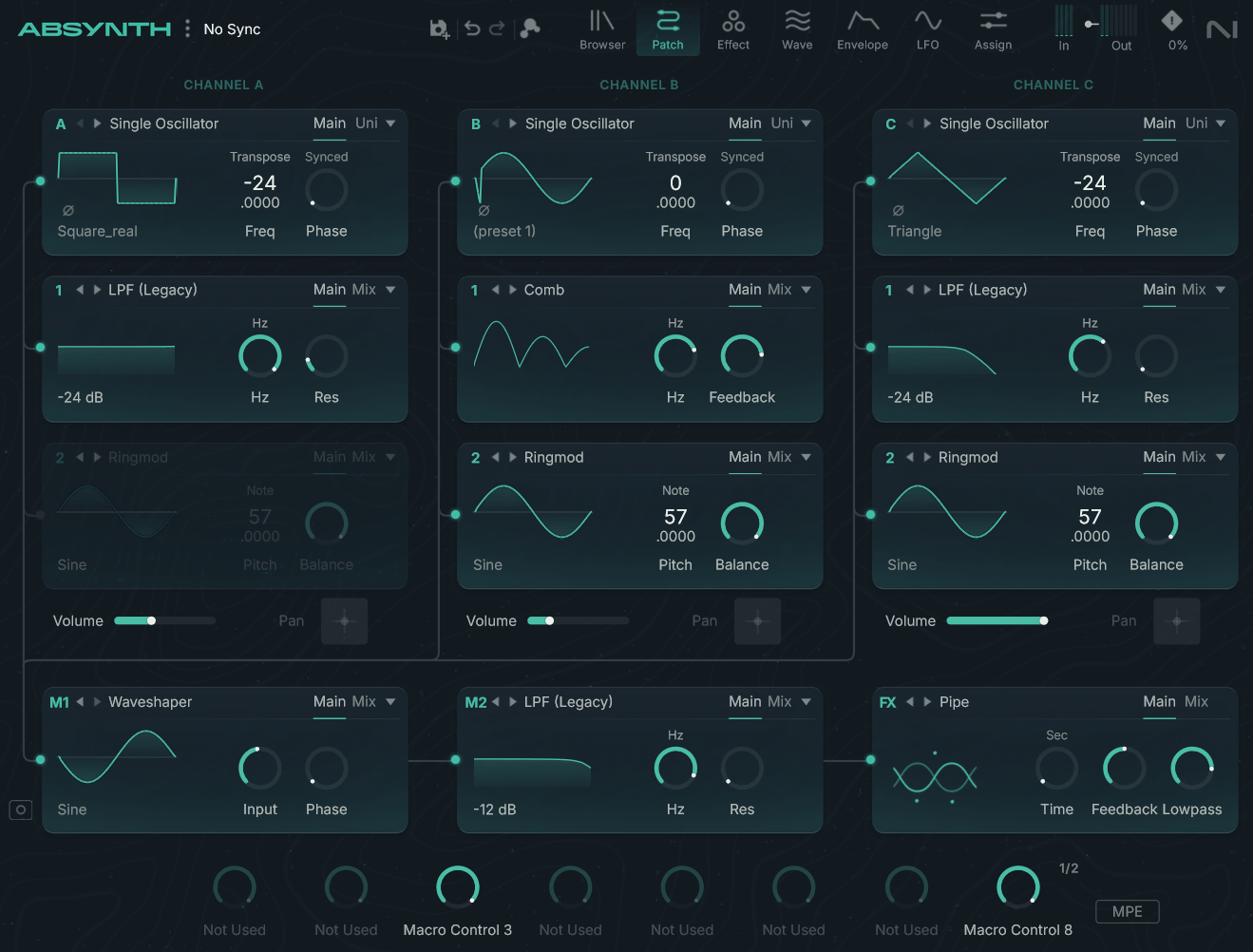
- Absynth 6
Absynth 6 recently returned after being discontinued for several years, rebuilt from the ground up with its original creator, Brian Clevinger.
It’s a semi-modular soundscape synth combining granular, FM, wavetable, and subtractive synthesis. It’s genuinely one of the more distinctive-sounding tools in either catalog, built for evolving, otherworldly textures rather than conventional leads or basses.
- Kontakt Libraries deserve mention as NI’s biggest sound design advantage. Because Kontakt is open to scripting, hundreds of third-party developers create instruments, making its content depth far surpass that of Native Instruments’ in-house work.
On the Arturia side, the deep sound design work centers on Pigments and the Augmented Series, offering a robust counterpart to Kontakt’s expansive library ecosystem.
Pigments blends multiple synthesis engines, generative sequencing, and a deep modulation system. Its updates have consistently added significant features at no extra cost to existing owners.
- The Augmented Series
s Arturia’s hybrid sampling and synthesis line goes deeper than most people expect. It currently includes Augmented STRINGS, Augmented VOICES, Augmented MALLETS, Augmented GRAND PIANO, Augmented BRASS, and Augmented WOODWINDS, with newer additions such as Augmented YANGTZE and Augmented PERSIA, which cover Chinese and Persian instrument traditions.
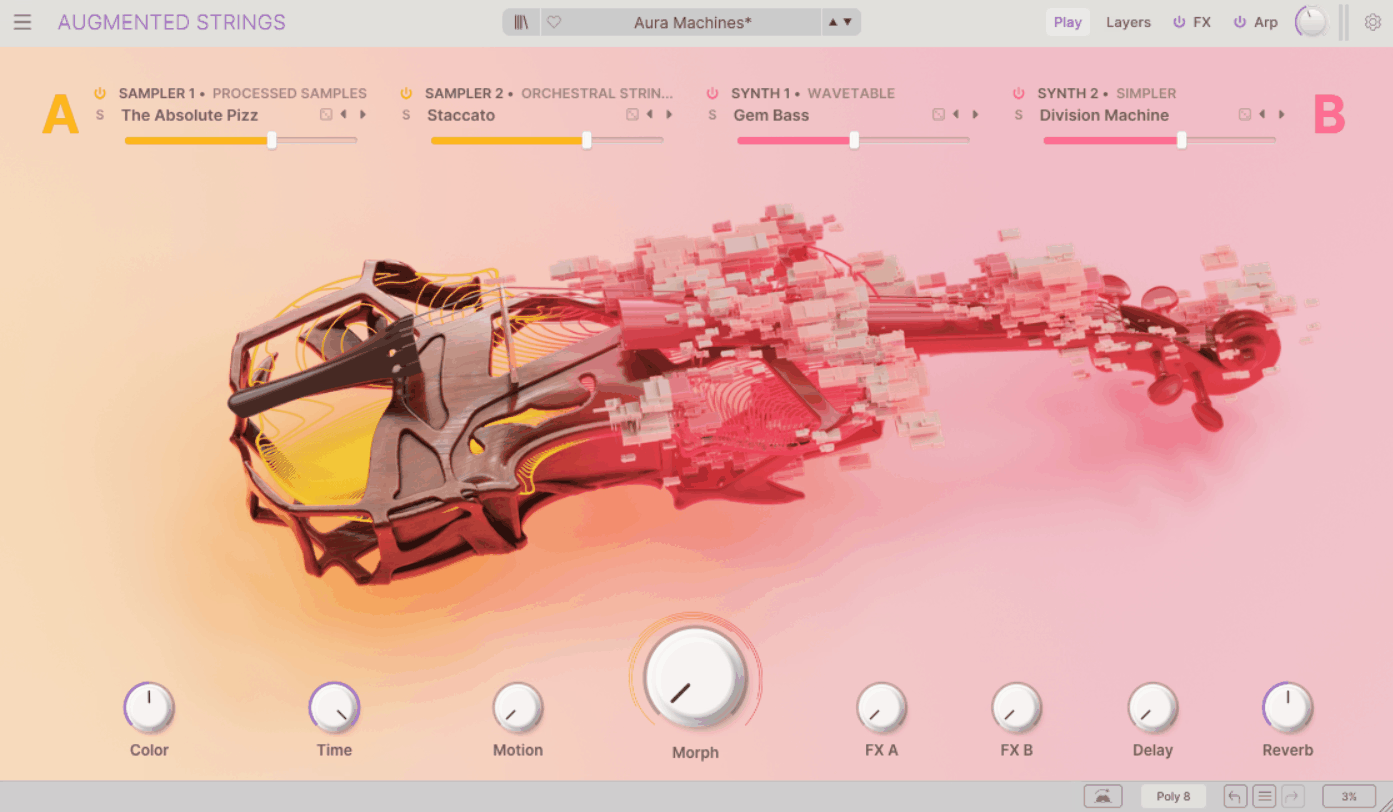
How the Augmented Series actually works is what makes it interesting for sound design specifically.
Each instrument blends sampled acoustic sources with Arturia’s own synthesis engines. These include Virtual Analog, Granular, Wavetable, and Harmonic modes. You can morph between the acoustic and synthetic layers in real time, instead of treating them as separate categories.
- DX7 V
FM synthesis has a reputation for being brutally hard to program. With DX7 V get the glassy, metallic character that defined many 80s electric pianos and basses. The operators and envelopes are laid out so you can actually shape them in real time, instead of hunting through menus.
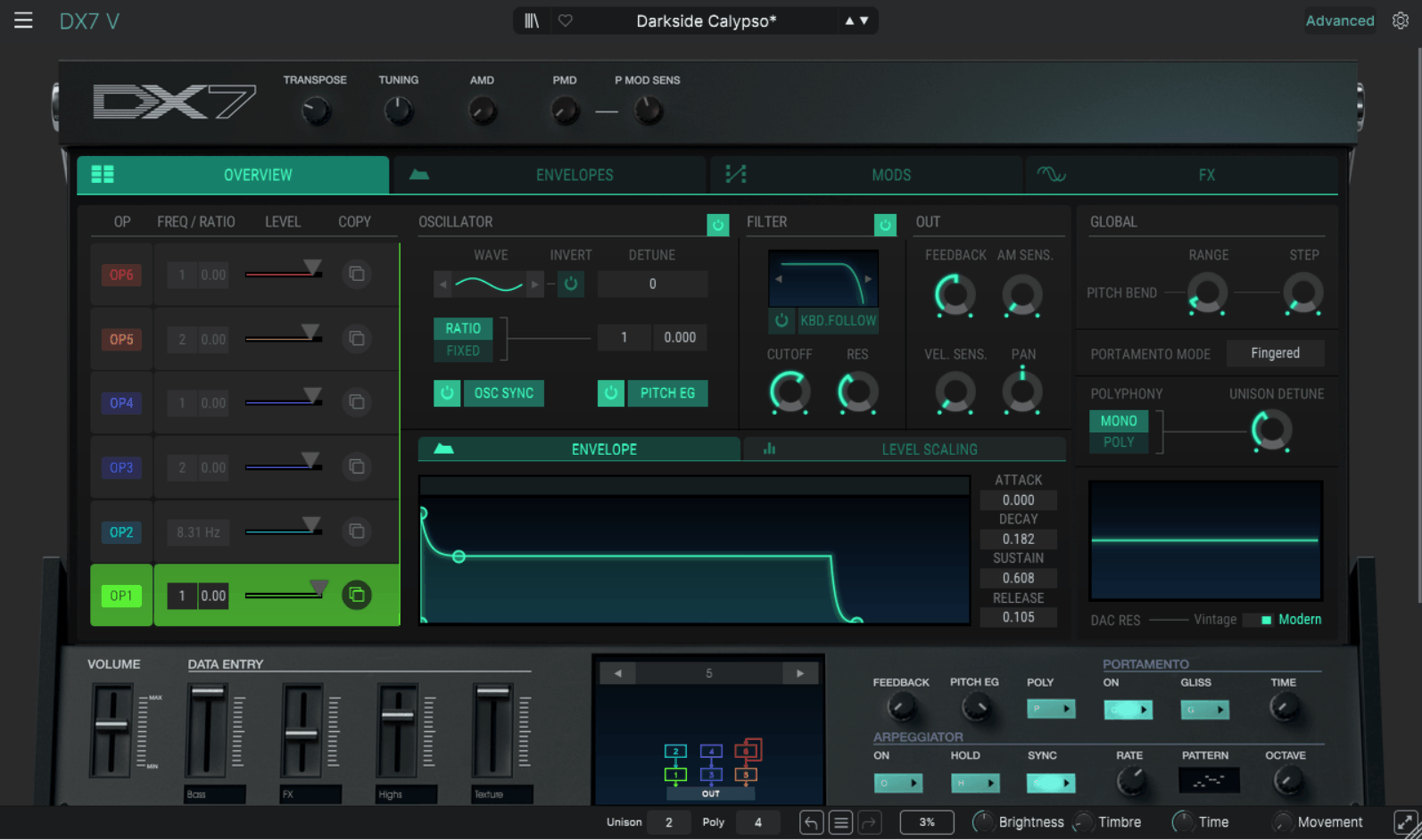
Tones that used to take weeks to create on the original hardware can now be made in minutes, showing how this instrument simplifies a once complex synth workflow and makes advanced sound design much easier.
- Pigments
Pigments includes five different synthesis engines: Virtual Analog, Wavetable, Harmonic, Sample, and Granular.
The modulation system is especially useful for sound design because you can connect almost any two parameters just by dragging, without needing to open any menus.
Major updates have added new synthesis engines for existing owners at no extra cost, so the instrument keeps growing in sound design potential even after you buy it.
- Pure LoFi
With Pure Lofi you get Degraded, textured sound design is the entire point here rather than anything resembling clean synthesis. Bitcrushing, sample-rate reduction, and tape-style wobble are all built specifically for tones that feel worn-in and nostalgic rather than pristine.
Pads, chords, and ambient textures are where this one earns its keep, seamlessly adding a sense of history to a sound that a cleaner synth simply can’t fake. This unique character sets it apart from conventional synths.
- MiniFreak V
Transitioning to another approach, a hybrid hardware synth gets its full software counterpart here, pairing digital oscillator modes like wavetable, granular, and physical modeling with an analog-style filter section.
The dual-engine design allows two completely different synthesis approaches to be layered seamlessly within a single patch.
Producers who like sketching ideas on the physical synth and refining them later benefit the most, since the hardware and software versions stay in sync.
- Korg MS-20
Aggressive, self-oscillating filters and a raw, slightly unpredictable character define this emulation of the semi-modular Korg classic. That patch bay approach from the original hardware carries over too, letting you route signals in ways a standard synth layout simply wouldn’t allow.
When a sound design tool with resistance is needed, this instrument delivers; its rawness defines its reputation.
- Acid V
Squelchy, resonant 303-style acid basslines are the entire reason this one exists, built around the sound that defined so much of early house and techno.
Programming sliding notes, accents, and filter sweeps is quick, as the sequencer is tailored to the genre’s workflow.
Rather than treating acid basslines as an afterthought, the way general-purpose synths often do, this is a genuinely focused tool built around one specific sound.
- Modular V
Classic modular synthesis is recreated here through a virtual patch bay, letting you build signal paths from scratch rather than working within a fixed synth architecture.
No preset structure exists to guide you, which makes the learning curve steeper but genuinely rewarding once the module interactions click.
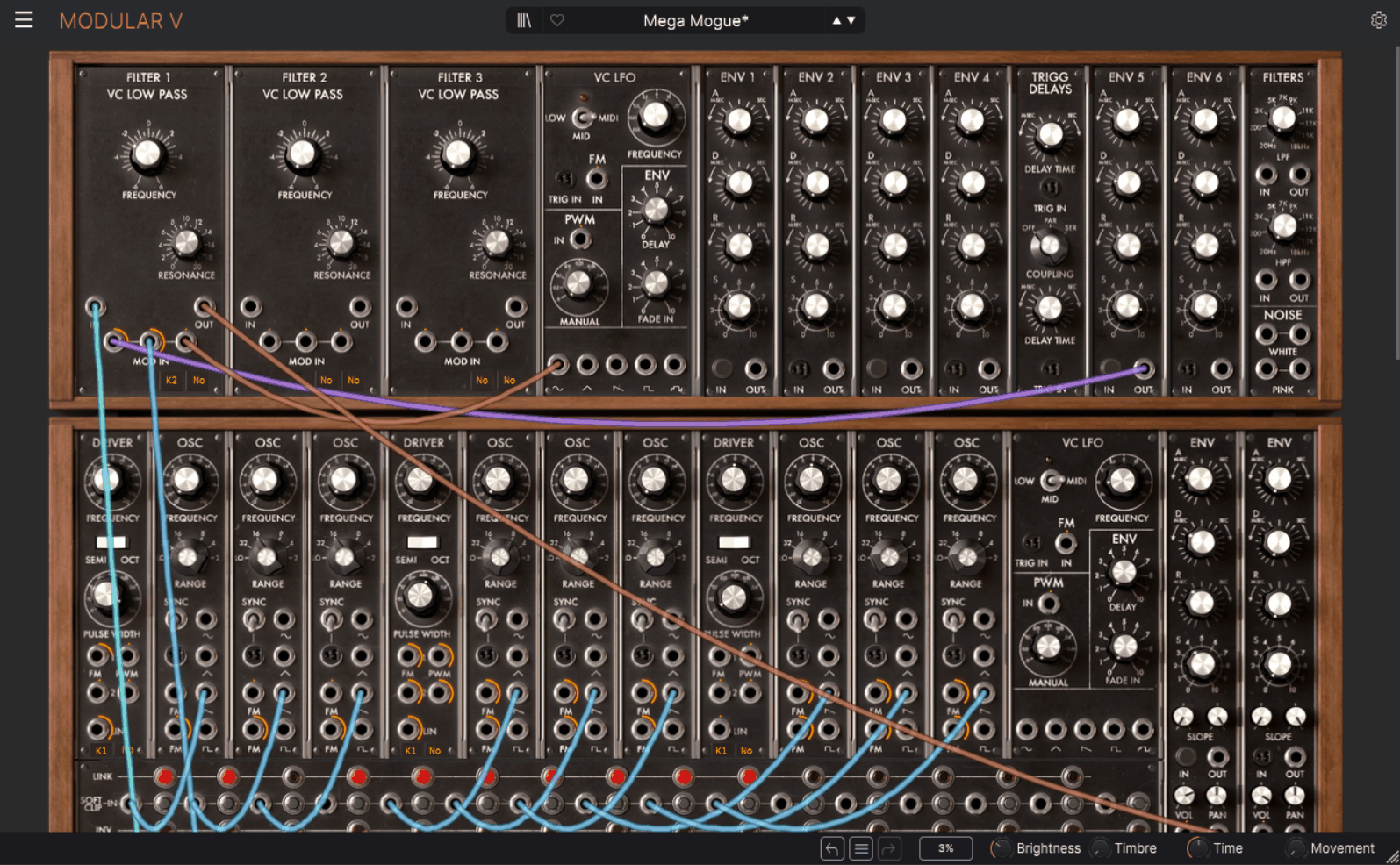
Sound designers are drawn to full control over signal flow, preferring to make every routing decision themselves instead of letting a synth automate creative choices.
Native Instruments offers greater sound design breadth, thanks to the open Kontakt ecosystem and Reaktor, which lets you build almost anything from scratch.
Arturia’s sound design tools are narrower but more polished and cohesive, since Pigments and the Augmented Series share a design language and feel unified in their vision.
Effects, Mixing, and Mastering Tools
The two brands take noticeably different approaches here. Arturia’s FX Collection bundles effects plugins, most modeled on classic analog hardware, including compressors, EQs, saturators, and distortion tools, all with a creative, characterful bent.
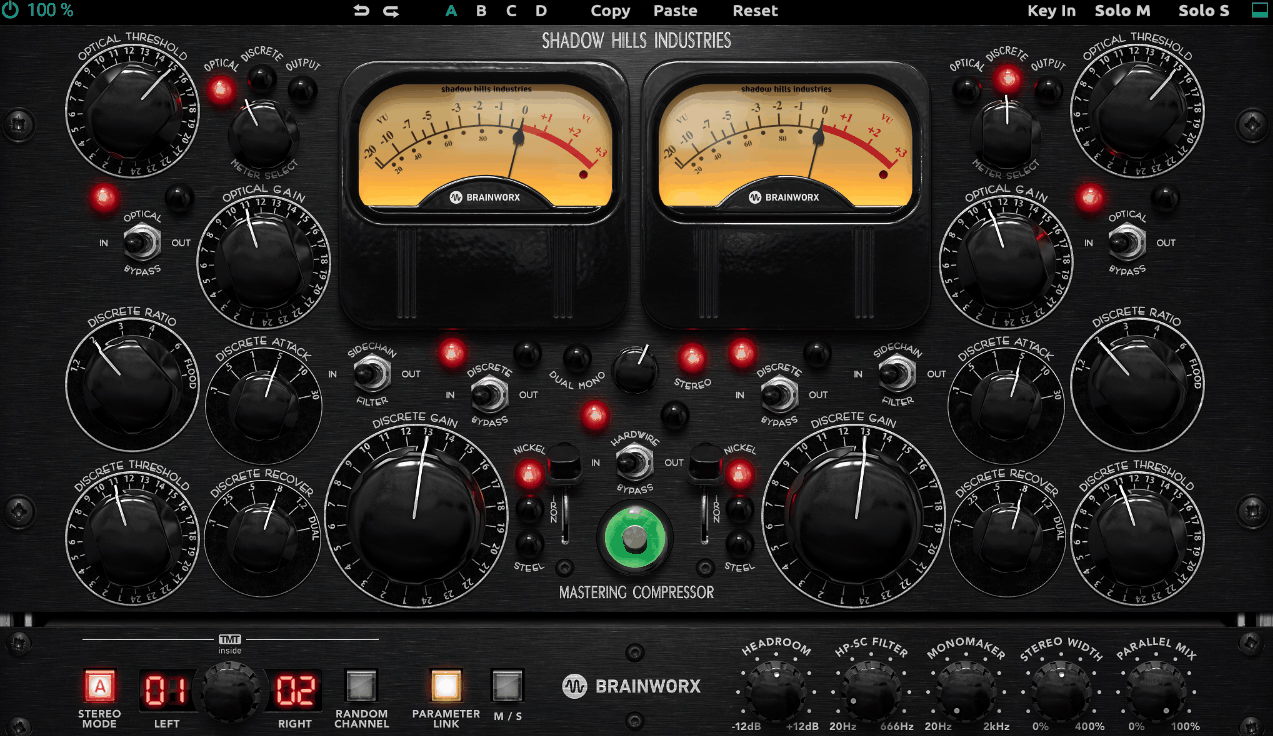
Native Instruments relies on its ownership of iZotope, Plugin Alliance, and Brainworx for much of its mixing and mastering power, bundling tools like Ozone 12 (mastering), Nectar 4 (vocals), and Brainworx console emulations such as bx_console AMEK 200, depending on your Komplete tier.
NI also has its own Guitar Rig 7 Pro line for amp and pedal simulation, which is an area Arturia doesn’t address at all.
- Arturia’s effects are vintage and characterful
Most FX Collection plugins are built around specific pieces of classic hardware, so they carry a strong sonic identity rather than trying to be neutral, all-purpose tools.
- NI’s mixing tools lean modern and analytical
The iZotope-powered tools bundled into Komplete tend to use assisted or AI-driven processing, which is a fundamentally different philosophy from Arturia’s hardware-modeled approach.
- Guitar processing is NI-only territory.
If amp sims and pedal chains matter to you, Arturia simply doesn’t have anything comparable in its catalog right now.
Hardware Keyboards and Controllers
Both companies also make MIDI keyboard controllers, and this is where many buyers end up genuinely torn.
Arturia’s KeyLab line, currently at MK3, is built as a broad, multi-DAW hands-on controller with a generous set of knobs, faders, and pads that work well with any DAW.
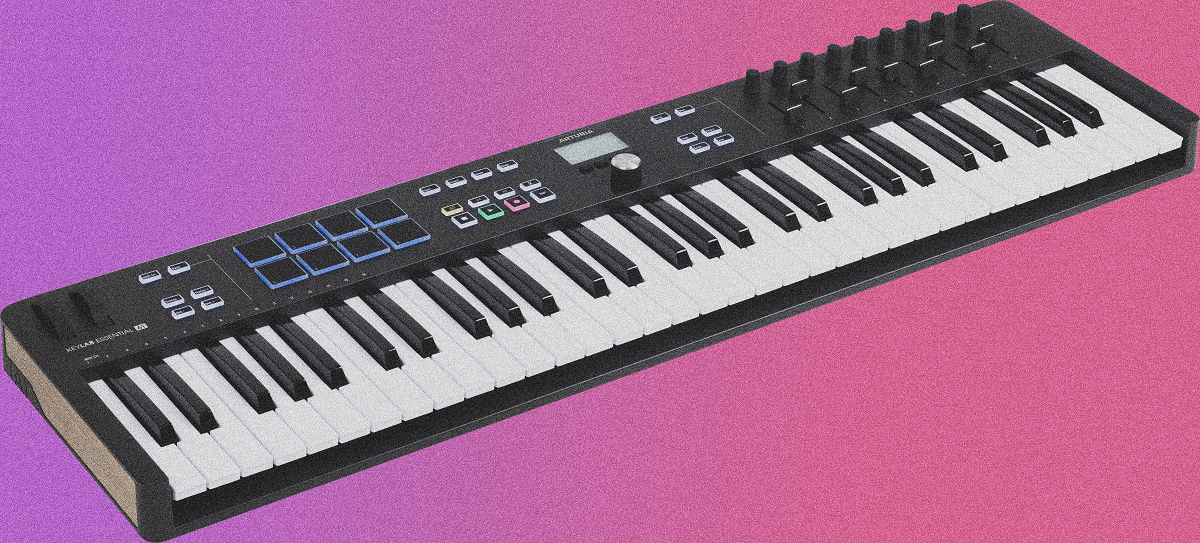
Native Instruments’ Komplete Kontrol S-series, now in its MK3 generation, takes a more focused approach.
It’s built for deep integration with NI’s software through NKS, which automatically maps plugin parameters to the controller’s screen and encoders. However, this experience is noticeably weaker outside NKS-compatible software.
The KeyLab is a more flexible, DAW-agnostic choice. The Komplete Kontrol offers deeper, more integrated control for those committed to the NI ecosystem.
Neither is objectively better; they’re just built around different assumptions about how you work.
Hardware Synthesizers and Beat-Making Gear
This is genuinely where the two brands stop competing directly and start doing very different things. Arturia has a real hardware synthesizer lineup, including the MiniFreak, PolyBrute, MicroFreak, MiniBrute 2S, DrumBrute Impact, and the AstroLab stage keyboard, which runs V Collection instruments natively without needing a connected computer.
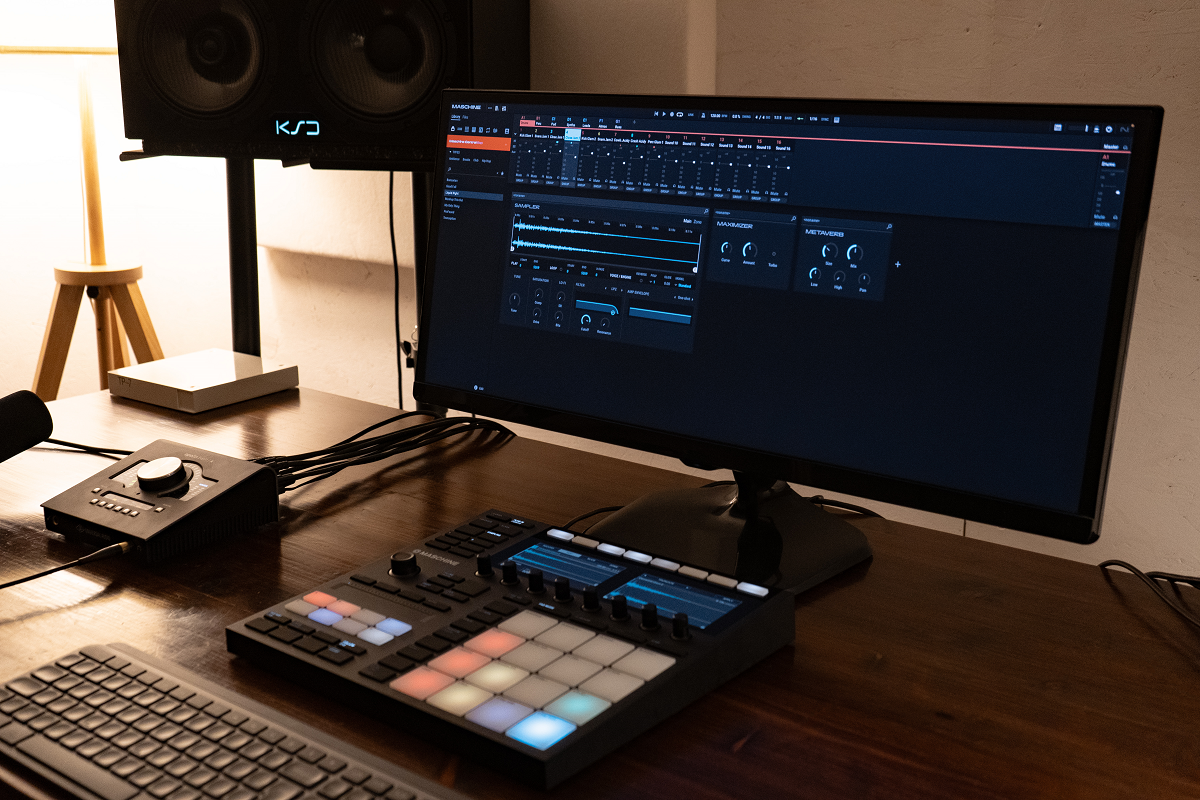
Native Instruments doesn’t really compete in the standalone hardware synth space. Their hardware focus primarily centers on Maschine, their beat-making and sample-triggering hardware and software combo, alongside the Komplete Kontrol keyboards already covered above.
If owning an actual analog or hybrid hardware synth matters to you, and not just a plugin controller, Arturia is simply the brand actively building in that space right now.
If your hardware needs center on beat production and sample triggering, Maschine is the more relevant NI product to consider instead, though it’s worth noting that Maschine now sits in the same corporate family as Akai’s MPC line following the inMusic acquisition, which could shape how both product lines evolve.
Software Ecosystem and Day-to-Day Management
The ecosystem each brand builds around its products affects daily workflow more than people expect when they go in.
Native Instruments runs everything through Native Access, which manages installation, activation, and updates across a catalog spanning hundreds of gigabytes and dozens of separate libraries.
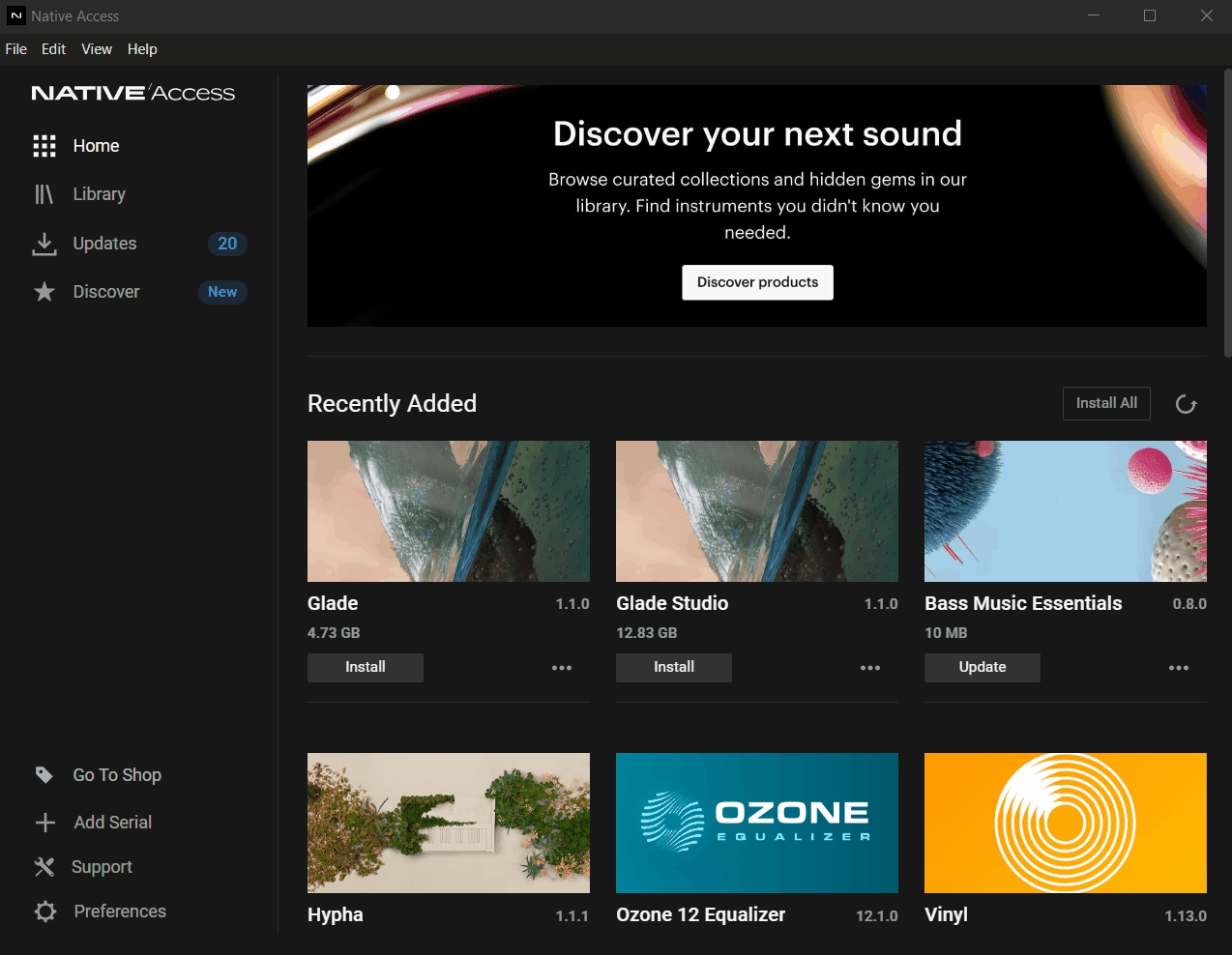
Arturia uses the Arturia Software Center, which handles a noticeably smaller and more contained catalog, since V Collection, FX Collection, and Pigments are really the core of what most users install.
Because the footprint is lighter, the whole experience tends to feel faster and less cluttered.
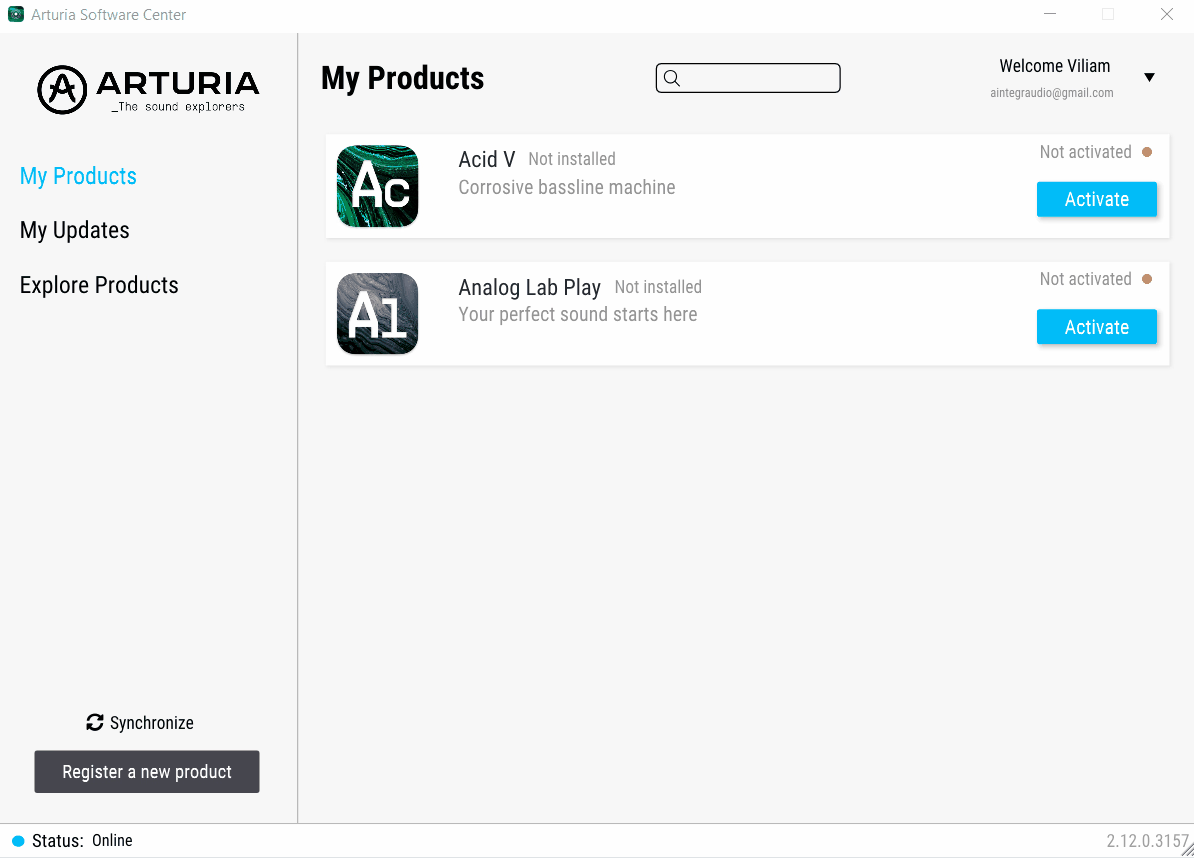
Neither system is perfect. Native Access can feel overwhelming when managing multiple Komplete tiers and third-party Kontakt libraries. In contrast, Arturia’s simpler setup may feel limiting for producers who want a platform to house everything.
Community and Support
This part of the comparison genuinely surprised me after proper research. Both brands have mixed reputations, just in different ways. Neither is clearly better overall, and I think honesty is better than forcing a winner.
Native Instruments’ community forum is large and active, reflecting Komplete’s sizable user base. However, support tickets are often described as slow, with several users reporting long, drawn-out threads before resolution.
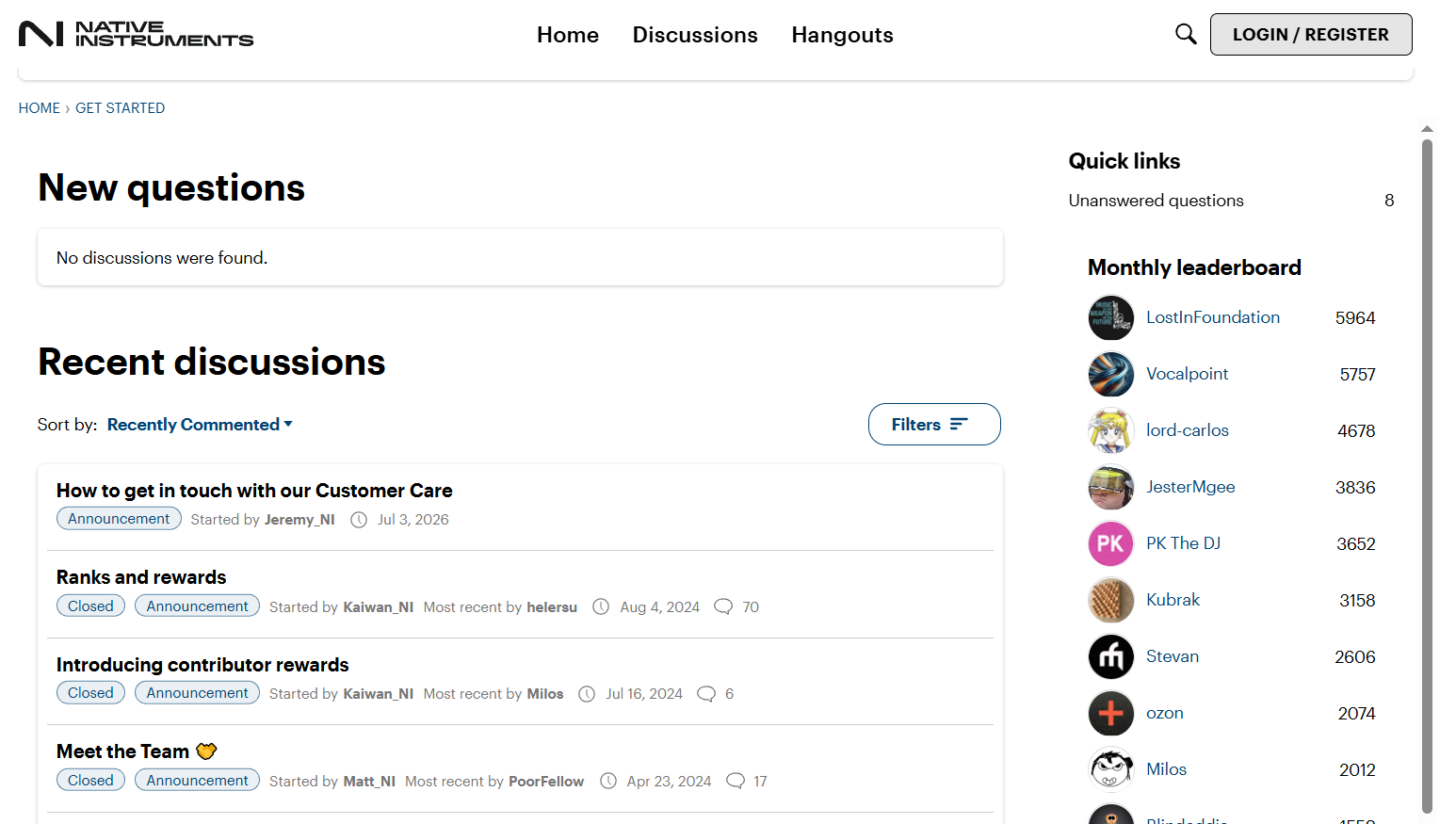
The recent insolvency and ownership change has also understandably shaken user confidence, with some longtime customers voicing concern about long-term reliability during the transition to inMusic ownership.
Arturia’s support has a more personal reputation, with plenty of users describing genuinely thoughtful, above-and-beyond service, including free replacement parts and quick responses to hardware issues.
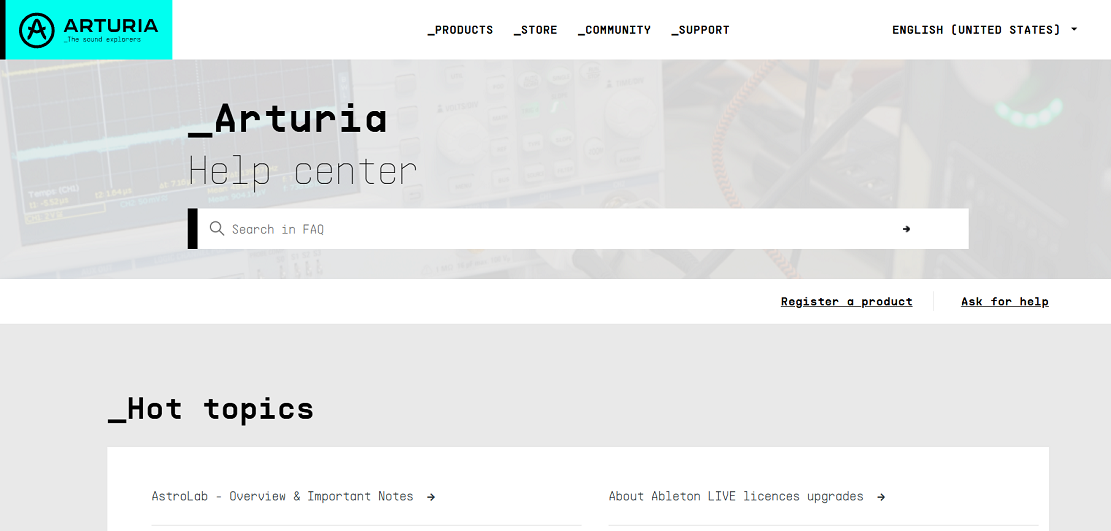
That said, it’s not universally positive either, and a fair number of users report slow response times as the company has grown, particularly around software licensing and registration issues.
- Both brands have large, active online communities where users share presets, patches, and troubleshooting help, and both maintain official forums alongside a strong presence on sites like KVR Audio and Gearspace.
- Neither brand offers phone support as a default option for most regions, with both relying primarily on ticket-based systems, which is a common source of frustration in user reviews for both companies.
- NI’s Reaktor and Kontakt communities in particular are notably active, with user-built content genuinely extending what the software can do beyond factory content.
Deals, Pricing, and Long-Term Value
Both brands are aggressive with sales, and knowing this in advance can save you a meaningful amount of money.
Native Instruments runs frequent promotional windows, particularly around Black Friday and its own Summer Sale, where Komplete tiers and individual instruments regularly see substantial discounts.

Arturia follows a similar pattern, with V Collection and individual Augmented Series instruments frequently discounted by 50 to 60 percent during Arturia’s own promotional periods.
Neither brand’s regular sales should be considered rare events; they happen predictably enough that buying at full price is usually avoidable if you’re willing to wait.
Where the two genuinely differ is in long-term update value. Arturia’s policy on Pigments has been to include major synthesis engine additions in free updates for existing owners, which is a meaningfully generous approach.
Native Instruments’ upgrade policy is more standard across the industry, with paid upgrade pricing typical for major version jumps on tools like Kontakt.
Strengths and Weaknesses of Each Brand
Laying this out plainly helps more than another paragraph of hedging, so here’s where I think each brand genuinely stands.
- Arturia’s strengths
Include focused, polished vintage synth emulations, a genuinely generous update policy on Pigments, a real hardware synthesizer lineup that Native Instruments simply doesn’t compete with, and a lighter, faster software footprint overall.
- Arturia’s weaknesses
There is a notable gap in sampling infrastructure: no guitar amp simulation at all, a narrower overall catalog than Komplete, and inconsistent support response times as the company has scaled.
- NI’s strengths
You get unmatched breadth through Kontakt’s open ecosystem and third-party libraries, genuinely deep sound design tools in Reaktor 6 and the revived Absynth 6, strong mixing and mastering coverage through iZotope and Brainworx, and Guitar Rig covering a category Arturia doesn’t touch.
- NI’s weaknesses
You need a massive storage footprint at higher Komplete tiers, a slower, more inconsistent update cadence for tools like Massive X and Reaktor, frequently criticized customer support, and genuine uncertainty about the company following its 2026 insolvency and acquisition by inMusic.
Which Brand Should You Actually Choose?
Honestly, I don’t think this needs to be an either-or decision for most producers, since plenty of people end up owning tools from both brands without any conflict. That said, here’s how I’d break it down by what you actually need.
- Choose Arturia if:
Vintage synth sounds are central to your work, and long-term software stability matters to you.
- Choose Native Instruments if:
You need sampling and cross-genre versatility, and want actual hardware synthesizers. Also, if the beat production and sampling define your workflow
[sp_easyaccordion id=”4993″]

Hey, I started Music Circuit to write about plugins and gear, so you always know what’s new and what’s worth trying. You’ll also find guides and tips here to help you get started, whether you’re picking your first plugin or building out a full studio.
