When you purchase through the links on my site, you support the site at no extra cost to you. Here is how it works.
The Pulsar Audio IPA 25 is a highly versatile VCA compressor that combines classic bus compression with modern sidechain shaping, multiple circuit flavors, and built-in peak control. It's especially strong for mix buses, drums, and mastering, where its flexibility lets you move from clean and controlled to colored and aggressive without changing plugins. If you want a simple compressor, it may offer more than you need, but for one dynamics plugin that can cover a wide range of mixing and mastering tasks, the IPA 25 is an excellent choice.
Pros
- + Four VCA circuits with distinct tonal characteristics
- + Excellent sidechain EQ and stereo-link controls
- + Adaptive clipper/limiter adds useful peak control
- + Versatile enough for buses, masters, drums, and vocals
- + Efficient CPU usage, even with oversampling
- + Zero-Latency mode makes it practical for tracking
Cons
- - Can be overkill if you only need basic bus compression
- - Not ideal for slow, gentle optical-style leveling
- - The many options may slow down simple workflows
- - Adaptive limiter is less impressive at light settings
If you’ve been looking for a VCA bus compressor plugin that does more than just recreate a single classic circuit, you’ve probably come across the Pulsar IPA 25 floating around mixing forums and mastering chats since its release in late 2025.
The IPA 25 is Pulsar Audio’s take on the legendary RMS-driven VCA bus compressor found on countless consoles and mix bus chains. It’s built around the idea of modeling the original’s gain-reduction behavior faithfully, while giving me access to circuit variations, sidechain shaping, and peak control the hardware never offered in one box.
I’ve been running it across several mix and mastering sessions over the last few months, and this approach holds up in practice. The glue you’d expect from a classic VCA compressor is all there, but I’m no longer locked into one flavor of that glue.
I can swap the internal circuit and the same threshold and ratio settings produce a noticeably different harmonic result, because the modeling changes how the gain-reduction stage itself behaves, not just what gets tacked on afterward.
But is the Pulsar Audio IPA 25 actually worth it?
I think it’s one of the smartest bus-compressor investments you can make if you mix or master regularly. Here’s what you’re actually getting in the box:
- Four selectable VCA circuit topologies
- A full visual sidechain EQ with real-time curve editing
- An adaptive clipper/limiter stage built into the same signal path
- Adjustable stereo link controls, not just linked/unlinked
- A genuinely efficient CPU footprint, even with oversampling engaged
It won’t replace a slow-attack optical compressor for gentle leveling. But for glue, punch, and controlled aggression on buses and masters, it covers ground that a single-circuit compressor plugin simply can’t.
The VCA character and why it matters
The headline quality of the IPA 25 is something I feel in how a mix locks together. It’s not something I can point to on a single knob.
RMS-detection VCA compressors have a specific way of reacting to program material. The gain reduction tracks the overall energy of the signal rather than chasing every individual peak.
When I push a drum bus through it, the kick and snare start behaving like they’re being played in the same room, rather than two separate signals glued together after the fact.
This detection behavior is what makes VCA bus compression sound like “glue” in a way that’s hard to describe technically. It’s obvious the moment I bypass it.
The IPA 25 reproduces this convincingly, and then lets me decide how much harmonic personality rides along with it. Set to Clean VCA, the compressor tracks the source with almost no added color, which I find genuinely useful when I want the pumping and cohesion of RMS detection without any extra tone stacked on top.
Switch to Original VCA and I get the same detection behavior with the subtle rounding and low-level harmonic content the source hardware is known for. It doesn’t sound like a different compressor was swapped in; it sounds like the same compressor with its personality turned up.
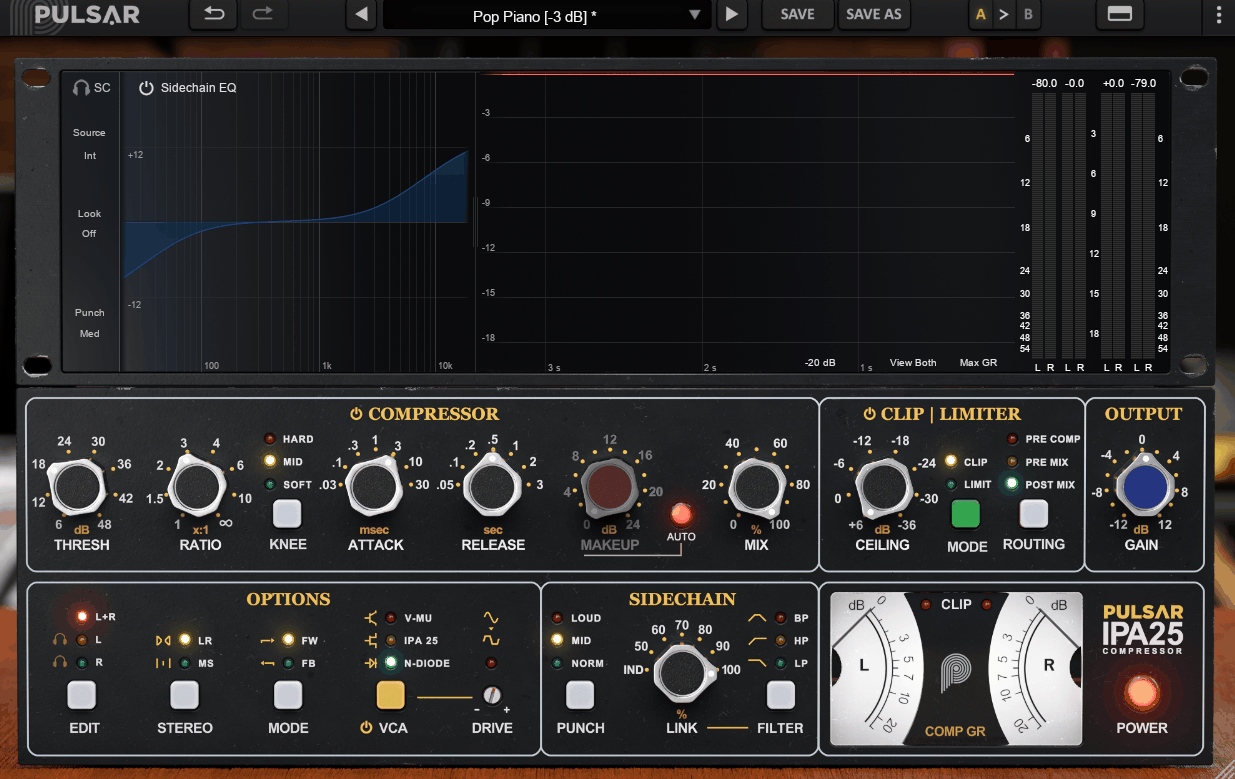
The dual interface: hardware rack or visual sidechain
One of the smartest design decisions in the IPA 25 is giving me two completely different ways to shape how the compressor reacts.
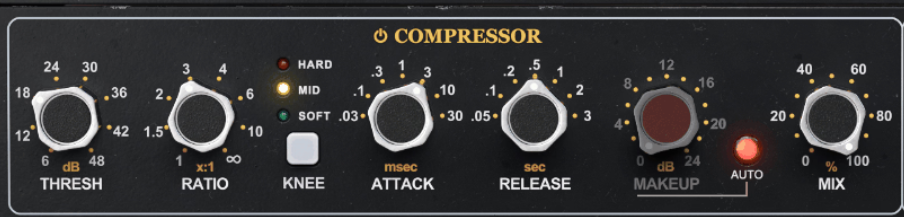
Down in the main control rack I get the familiar threshold, ratio, attack, release, and makeup gain layout. Anyone who has used a classic VCA bus compressor will recognize it instantly.
Above that sits a visualization rack with a real-time gain-reduction meter, a sidechain listen mode, and a full parametric sidechain EQ with its own curve editor.
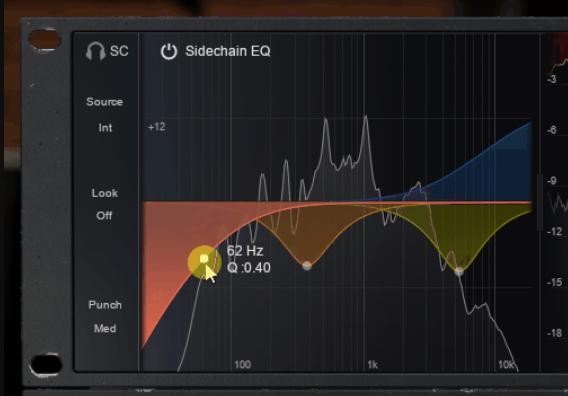
I typically dial in the basic compression by ear first, using the hardware-style controls the way I would on a console. Then I switch focus to the visual sidechain EQ once I know I need the compressor reacting differently to specific frequencies.
On a drum bus, boosting a couple of dB around 2 to 3kHz in the sidechain makes the compressor respond more to snare crack without letting low kick energy dominate the gain-reduction decision. On a vocal bus, gently rolling off the low end of the sidechain keeps the compressor from pumping on breath and proximity bass.
Pulsar also added a Punch selector with Norm, Mid, and Loud settings. It shifts where the detector’s attention sits before I even touch the sidechain EQ, giving me a fast, broad-strokes way to change how aggressively the compressor reacts.
Four circuits and the drive control
The circuit section is where most of the plugin’s personality lives. Each of the four gain-reduction topologies keeps the same underlying RMS detection and ratio-dependent knee, but changes how the actual gain-reduction stage behaves harmonically:
- Clean VCA
The most transparent option, giving me accurate envelope control with essentially no added coloration. I use this most often on mastering buses where I want the cohesion of VCA compression without introducing extra harmonic weight.
- Original VCA
Adds the punchy, slightly rounded character the hardware design is known for, with harmonic content that increases as I push gain reduction harder. This is my default starting point on mix buses.
- V-Mu
Trades some of that punch for a smoother, tube-inspired softness with low-mid bloom, which works well on vocal groups and anything that benefits from feeling rounder rather than tighter.
- N-Diode
The most colored circuit, using asymmetrical clipping to add midrange grit. I use this sparingly, mostly on individual instruments or parallel drum chains where I want obvious character rather than transparent control.
The adaptive clipper/limiter
The IPA 25 introduces something genuinely useful that goes beyond a standard brickwall stage: an adaptive clipper/limiter built into the same signal path as the compressor.
Instead of treating every peak identically, it analyzes the incoming material and adjusts how it intervenes. Sustained or low-frequency content passes through with minimal added harmonics, while transient-rich or brighter material picks up a touch of controlled saturation as it’s brought under control.
In practice, this means I can push levels harder on a drum bus or master without the low end turning fuzzy. The transients also avoid the flattened feeling a generic limiter can produce under pressure.
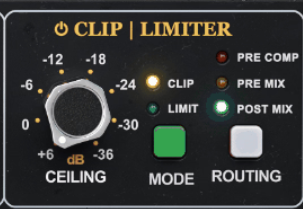
I’ve found it most useful as the final stage on a mastering chain, catching stray peaks after the compression stage without needing a separate limiter plugin. It’s also great on drum buses, where I want extra control on the snare crack without smearing the kick.
I’ll be honest that on gently compressed material, the difference between the adaptive behavior and a standard limiter is subtle. On anything pushed hard, though, it’s a meaningful difference in how transparent the limiting feels.
Sidechain shaping, stereo linking, and practical workflow
Beyond the main sidechain EQ, the IPA 25 gives me external sidechain input support and adjustable stereo link amounts, rather than a simple linked or unlinked toggle.
That matters on a stereo bus because full linking can occasionally cause one channel to pull the other around more than I’d like. Partial linking lets the compressor react to the overall stereo image while still giving each channel some independence.
On CPU usage, the IPA 25 is genuinely efficient for how much modeling is happening under the hood. I’ve been able to run several instances across a session, oversampling included, without the kind of performance hit heavier analog-modeled dynamics plugins sometimes bring.
There’s a dedicated Zero-Latency mode for tracking that disables look-ahead, the limiter stage, and real-time oversampling. It’s a thoughtful touch when I’m printing through the plugin while a performer is monitoring.
Auto makeup gain compensates for level changes as I adjust threshold and ratio, which keeps my A/B comparisons honest instead of letting the louder, more compressed signal win by default.
The plugin supports macOS 10.11+ and Windows 7+ in VST2, VST3, AU, and AAX formats. It requires iLok for authorization, and offers a free trial so I could test it on my own material before buying.
Presets for every source
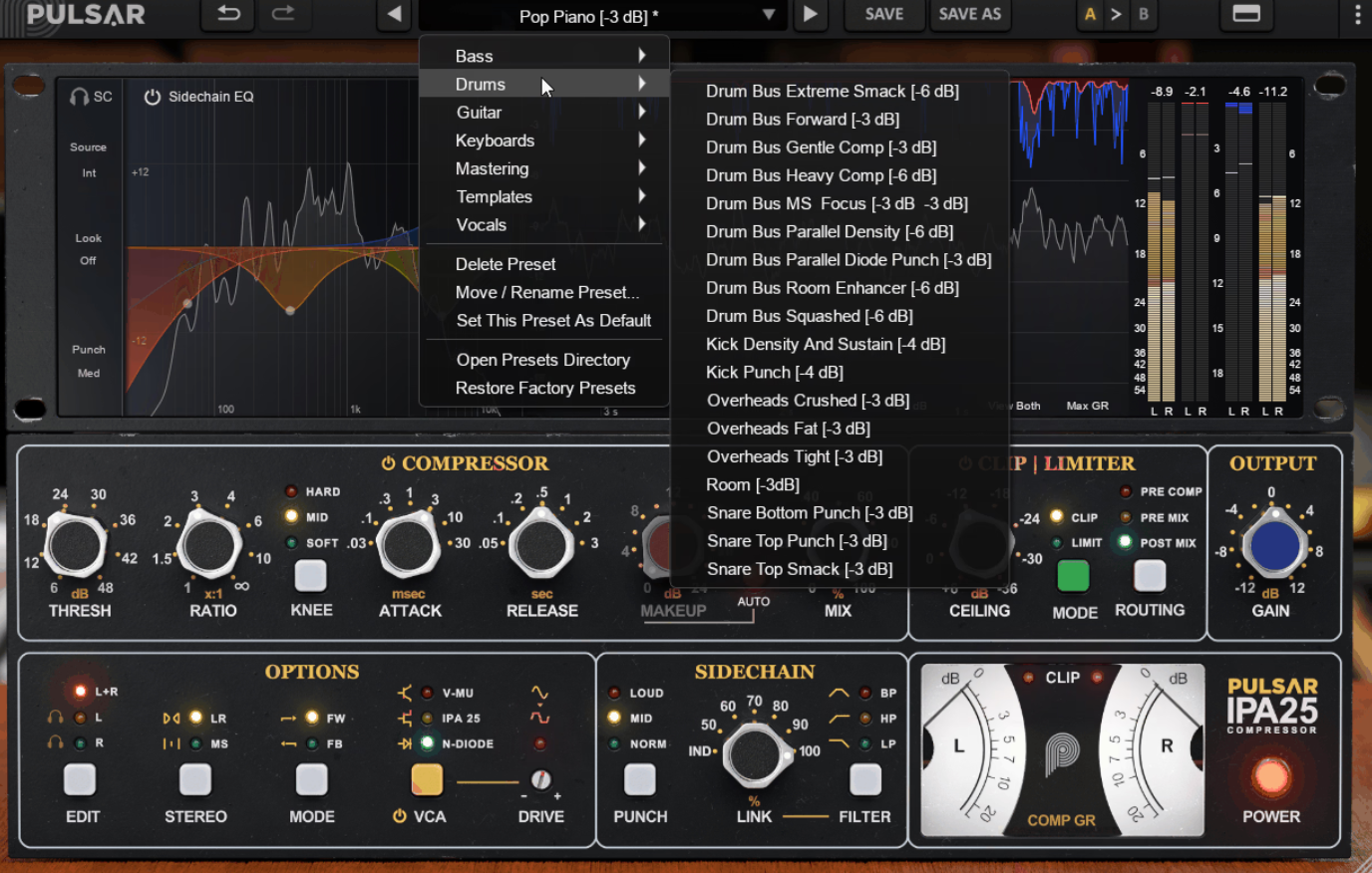
Also, I’d like to mention that IPA 25 ships with a deep factory preset library, organized by source rather than left as one generic bank. That structure alone saves time when I’m working fast.
There are dedicated preset categories for bass, drums, guitars, keyboards, mastering, and vocals, each built around the circuit, Drive, and sidechain settings that tend to suit that source best.
Where I would use it and who it’s for
I’ve settled into using the IPA 25 primarily on drum buses, mix buses, mastering chains, and vocal groups. Those are the contexts where it delivers the most value for me.
Here’s where I’ve found the IPA 25 earns its keep:
- Mix bus
Original VCA circuit, moderate Drive, a gentle ratio around 2:1 to 4:1 for glue rather than obvious pumping. This is my most common use, and it’s where the RMS detection does exactly what I want a bus compressor to do.
- Mastering
Clean VCA circuit for transparency, the adaptive limiter engaged as a final safety net, and light sidechain EQ to keep the compressor from over-reacting to low-end energy. A self-contained glue-and-control chain in one plugin.
- Drum bus
Original or N-Diode circuit depending on how much character I want, Punch set to Mid or Loud, and a sidechain EQ boost around the snare’s presence range so the compressor tracks the kit the way my ears do rather than chasing kick energy alone.
- Vocal buses
V-Mu circuit with a gentler ratio, low end rolled off in the sidechain to avoid breath and proximity triggering the detector, and the adaptive limiter catching the occasional loud syllable without flattening the performance.
- Parallel chains
N-Diode with higher Drive on a parallel bus, blended back under the clean signal, gives me an aggressive, characterful layer without committing the main signal to that much coloration.
Compared to plugin emulations that model a single fixed circuit, the IPA 25’s ability to switch topology without touching my threshold or ratio settings is the practical advantage that keeps it in rotation across more sessions.
But compared to a transparent, clean-only bus compressor, the IPA 25 does something different. It’s built to have personality when I want it and to step back when I don’t, rather than committing me to one tonal identity for the whole plugin. The IPA 25 won’t be the right choice for every dynamics task. If I need a slow, gentle optical-style leveler for vocals or a transparent mastering limiter with nothing else going on, a more focused tool is still the better fit.
Conclusion / Verdict
The Pulsar IPA 25 isn’t just another API-style bus compressor. It’s four compressors in one plugin, built around selectable VCA circuit topologies, a full visual sidechain EQ, and an adaptive clipper/limiter that most single-circuit compressors simply don’t offer. What makes it worth the investment is the flexibility without extra setup time. I can switch from a transparent Clean VCA on a mastering bus to a gritty N-Diode on a parallel drum chain, without touching my threshold or ratio settings each time.
The source-specific presets for bass, drums, guitars, keyboards, mastering, and vocals also mean I rarely start from a blank plugin, which speeds up my workflow considerably.
It won’t replace a dedicated optical compressor for slow, gentle leveling, and if you want a no-frills compressor with minimal decisions to make, the depth of options here might feel like more than you need. But for glue, punch, and controlled aggression on buses and masters, at around $129, I think the IPA 25 is one of the most versatile dynamics plugins available right now.
It’s replaced a compressor-plus-limiter pairing on my own mix bus template, and after several months of regular use, it’s earned a permanent spot there.

Hey, I’m Viliam, I started Music Circuit to write about plugins and gear, so you always know what’s new and what’s worth trying. You’ll also find guides and tips here to help you get started, whether you’re picking your first plugin or building out a full studio.