When you purchase through the links on my site, you support the site at no extra cost to you. Here is how it works.
I think Pro-L 2 has earned its reputation for a simple reason: it consistently gives you the control and predictability you want from a limiter without forcing you to fight the sound.
There are plenty of good limiters on the market now, but FabFiler Pro-L 2 still stands out because it gives you several genuinely useful limiting approaches, detailed metering, and a workflow that makes it easy to hear exactly what you’re changing.
That matters because limiting isn’t just about making a mix louder. The algorithm you choose, how the limiter responds to transients, and how much gain reduction you ask it to do can all change the character of the track.
Pro-L 2 gives you enough control to make those decisions deliberately instead of settling for whatever sounds acceptable.
Eight limiting algorithms worth understanding
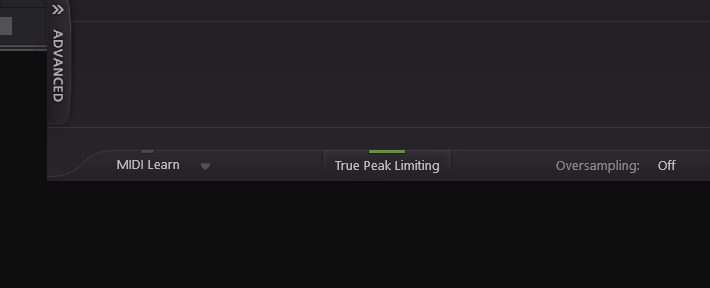
What gets glossed over in a lot of Pro-L 2 coverage is how meaningfully different the eight limiting algorithms actually are from each other. Knowing which one to reach for is where a lot of the value lives.
Here’s a practical breakdown:
- Transparent adds the least coloration, best for material with a tonal balance you don’t want to disturb
- Aggressive pushes harder into transients, suits material that needs more density without obvious pumping
- Bus is optimized for mix bus use on complex, wide-bandwidth signals
- Dynamic adapts its release behavior based on the incoming signal, most natural-sounding on material with significant level variation
- Allround and Safe cover general-purpose limiting across a wide range of sources
- Mastering and Loud sit at the more aggressive end for situations where maximum loudness is the priority
If you’re fighting pumping artifacts on a dynamic mix, switching to Dynamic before touching any timing controls is the first thing worth trying. I noticed that Loud handles high-density electronic material surprisingly well even at significant gain reduction values, which is not something every limiter can claim.
Metering
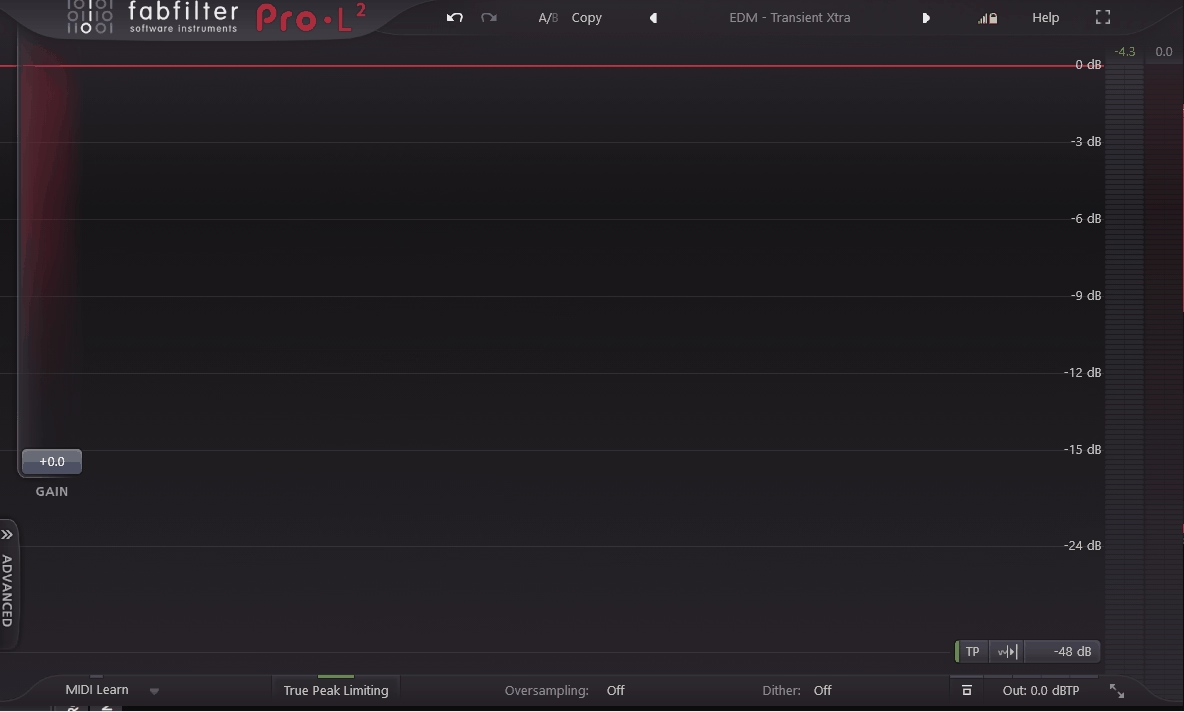
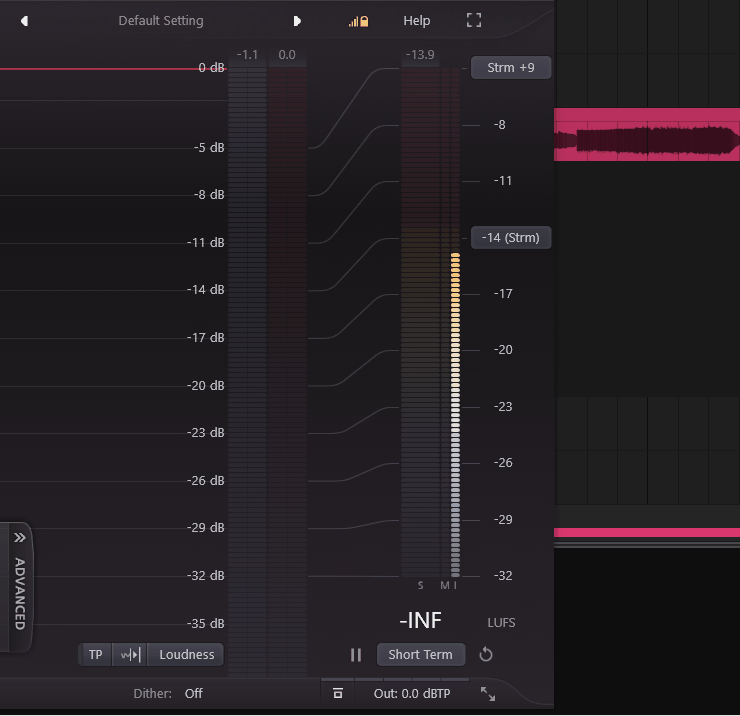
The metering in Pro-L 2 is one of its strongest aspects and something a lot of people underutilize. You get integrated LUFS, short-term LUFS, momentary LUFS, loudness range, and true peak readings all within the same window, which means you don’t necessarily need a separate metering plugin on the master bus.
Sample peak metering doesn’t account for inter-sample peaks, which occur during reconstruction in a DAC and during lossy encoding for streaming. Pro-L 2’s true peak ceiling control addresses that directly, and I appreciate that FabFilter made it a central part of the display rather than an afterthought.
The large waveform display shows you gain reduction in real time, making it immediately obvious how hard the limiter is working and where in the track it’s being pushed most. I realized this genuinely changes how you make gain reduction decisions because you’re seeing the shape of what’s happening rather than just watching a number.
The loudness targets for major streaming platforms are built directly into the metering display, covering Spotify, Apple Music, YouTube, Tidal, and others, so you can set a target and monitor your integrated reading in real time during playback.
Basic Controls
For me, the core workflow comes down to four controls you’ll interact with on almost every session:
- Gain drives the limiter and determines how much gain reduction is happening
- Output Level sets where your final output lands after limiting
- True Peak Ceiling should sit at -1 dBTP for most streaming delivery to avoid intersample distortion after lossy encoding
- Attack/Release in Auto mode works well as a starting point, though manual release on slower, more dynamic material often produces a more natural result
Approach Gain incrementally rather than dialing in a target loudness first and working backward. I found that switching to manual release on orchestral or acoustic material consistently produces a more natural result than leaving it in auto.

How to use it
Drums
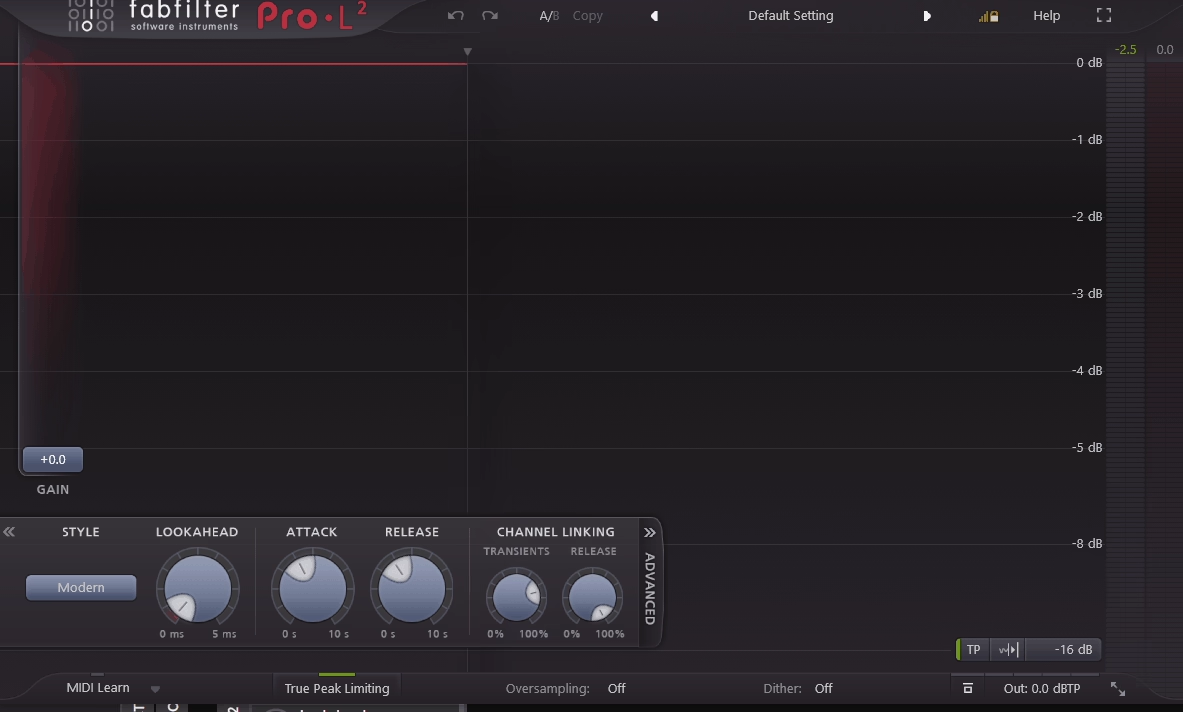
On a drum bus, the Aggressive algorithm catches fast transients firmly without turning the kit into a wall of noise, giving you density and punch simultaneously.
For hip-hop, trap, and hard-hitting pop where the kick and snare need authority without clipping the bus, Pro-L 2 with a tight true peak ceiling handles that cleanly.
I found it especially effective when parallel compression is already happening on the drum bus and you just need to catch occasional peaks without affecting the overall transient feel.
Bass
The Bus algorithm handles the complex waveform of a processed bass signal more gracefully than most, preserving the fundamental body of the sound even when catching several dB of gain reduction on loud notes.
For funk, R&B, and modern pop where bass needs to sit consistently without poking above a certain level, keep gain reduction to around 2 to 3 dB maximum because bass limiting becomes audible faster than limiting on a full mix.
Mastering
The Transparent and Dynamic algorithms are the workhorses here, covering the majority of material you’re likely to encounter, and the built-in LUFS metering with streaming platform targets makes the delivery side straightforward.
For acoustic, jazz, and classical where dynamics are a core part of the listening experience, Dynamic’s adaptive release lets you push harder than you’d expect without the result sounding obviously limited.
Other uses and genre considerations
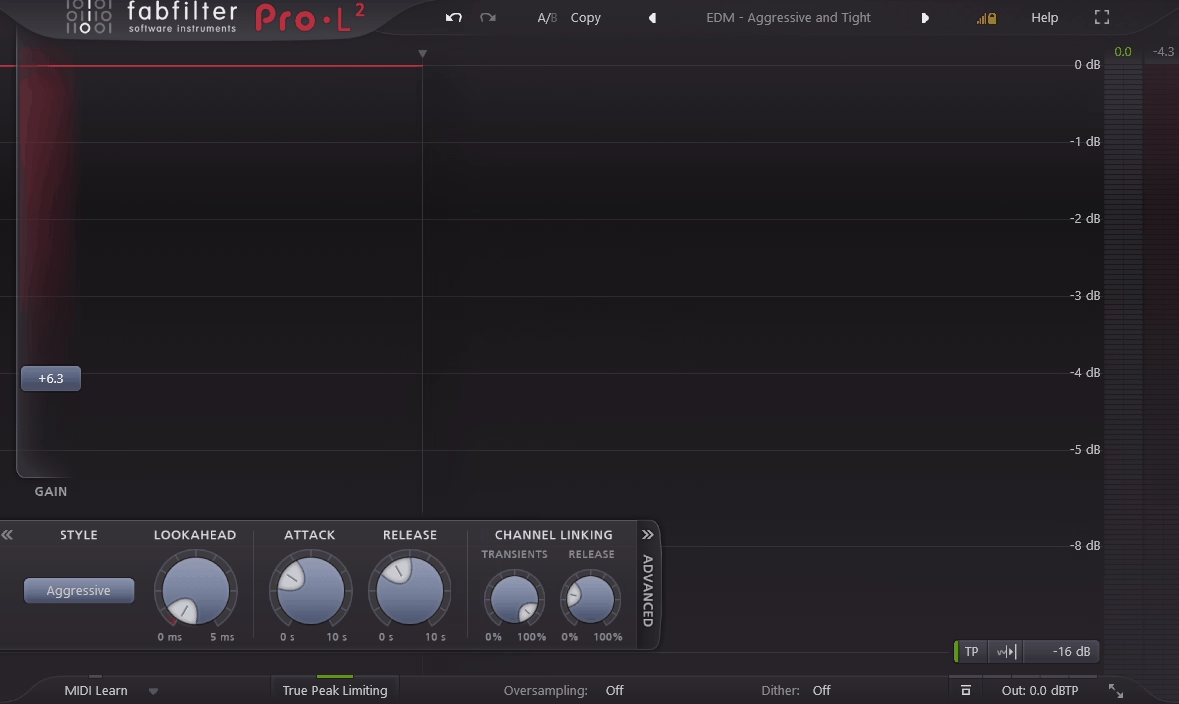
For electronic music and EDM where the master needs to hit streaming targets without sounding crushed, the Loud algorithm gives you more headroom than most people realize.
You will find presets for all sorts of genres, covering House, EDM, Hip-Hop, Trance Rock, Pop and Metal as well.
I found it handles dense, spectrally complex mixes well even pushing toward -9 to -10 LUFS integrated, which is territory where cheaper limiters fall apart. For cinematic and soundtrack work, running Pro-L 2 at a conservative gain setting with Transparent and a -1 dBTP ceiling keeps the music natural while protecting your output.
Pro-L 2 also handles stem limiting consistently, so if you’re delivering stems alongside a master, the character of the limiting stays uniform across all of them.
Is it still worth it in a crowded market
The limiter market has gotten more competitive since Pro-L 2 launched, with solid options from Sonnox, Waves, and Newfangled Audio worth considering. Pro-L 2‘s strengths remain its algorithm variety, metering quality, and the amount of control it gives you without the interface ever feeling cluttered.
Pro-L 2 is available for $199 and runs as a VST, VST3, AU, AAX, and AudioSuite plugin on both Mac and Windows, with native Apple Silicon support. CPU load is low even at high gain reduction values, which matters when it’s the last thing in a long plugin chain on the master bus.
I would recommend it without reservation to anyone doing serious mixing or mastering work who wants a limiter they can rely on across a wide range of material.
It comes with trial so definitely give it a shot!

Hey, I’m Viliam, I started Music Circuit to write about plugins and gear, so you always know what’s new and what’s worth trying. You’ll also find guides and tips here to help you get started, whether you’re picking your first plugin or building out a full studio.